

The global debate over the existence of extraterrestrial life has spilled out of congressional hearing rooms and onto the silver screen with unprecedented force. Legendary filmmaker Steven Spielberg has officially returned to his favorite cosmic frontier with his highly anticipated 34th feature film, a suspenseful conspiracy thriller centered on the ultimate leak of classified government secrets. The production, which launched in theaters across the United States last week, has already grossed an impressive $104 million worldwide against its $115 million budget. The film’s debut has sparked a massive cultural phenomenon, coinciding with an extraordinary real-world release of declassified documents by federal authorities that has left audiences questioning where fiction ends and reality begins.
The science-fiction thriller centers on a high-stakes, cross-country race to expose seven decades of hidden evidence regarding alien visitations to Earth. The story follows a young man named Daniel, played by Josh O’Connor, who carries a collection of encrypted hard drives containing more than 70 years of secret files compiled by a shadowy private defense contractor known as Wardex. As Daniel attempts to bring these disclosures to the public, he joins forces with Margaret, a Kansas City meteorologist portrayed by Emily Blunt. Both characters harbor lingering trauma from childhood abductions, which have left them with unique, unexplained telepathic and linguistic abilities that hold the key to translating the cosmic visitors’ messages.
As the duo flees across the American Midwest, they find themselves relentlessly pursued by Wardex, which operates as a modern-day, corporate equivalent of the legendary “Men in Black.” Academy Award winner Colin Firth stars as Noah Scanlon, the cold and calculating head of the defense contractor, who is determined to recover the hard drives and preserve the seven-decade cover-up at all costs. Conversely, Colman Domingo plays Hugo Wakefield, a former Wardex executive who has broken ranks with the company. Wakefield acts as a crucial ally to the runaway protagonists, risking his life to ensure that the classified extraterrestrial evidence is permanently released to the global population.
Rather than relying purely on speculative fiction, Spielberg and screenwriter David Koepp have woven decades of actual, real-world UFO folklore directly into the narrative. The script incorporates historical incidents that have fueled conspiracy theories for generations, including the infamous 1947 Roswell incident, the 1965 Kecksburg crash, and the 1966 Portage County police chase. The film also dramatizes a famous piece of modern folklore involving President Richard Nixon, who allegedly showed television legend Jackie Gleason alien bodies preserved in a secure vault. In the film’s continuity, this presidential leak is what ultimately convinces Wardex and the Department of Defense to hide future extraterrestrial secrets from subsequent presidents entirely.
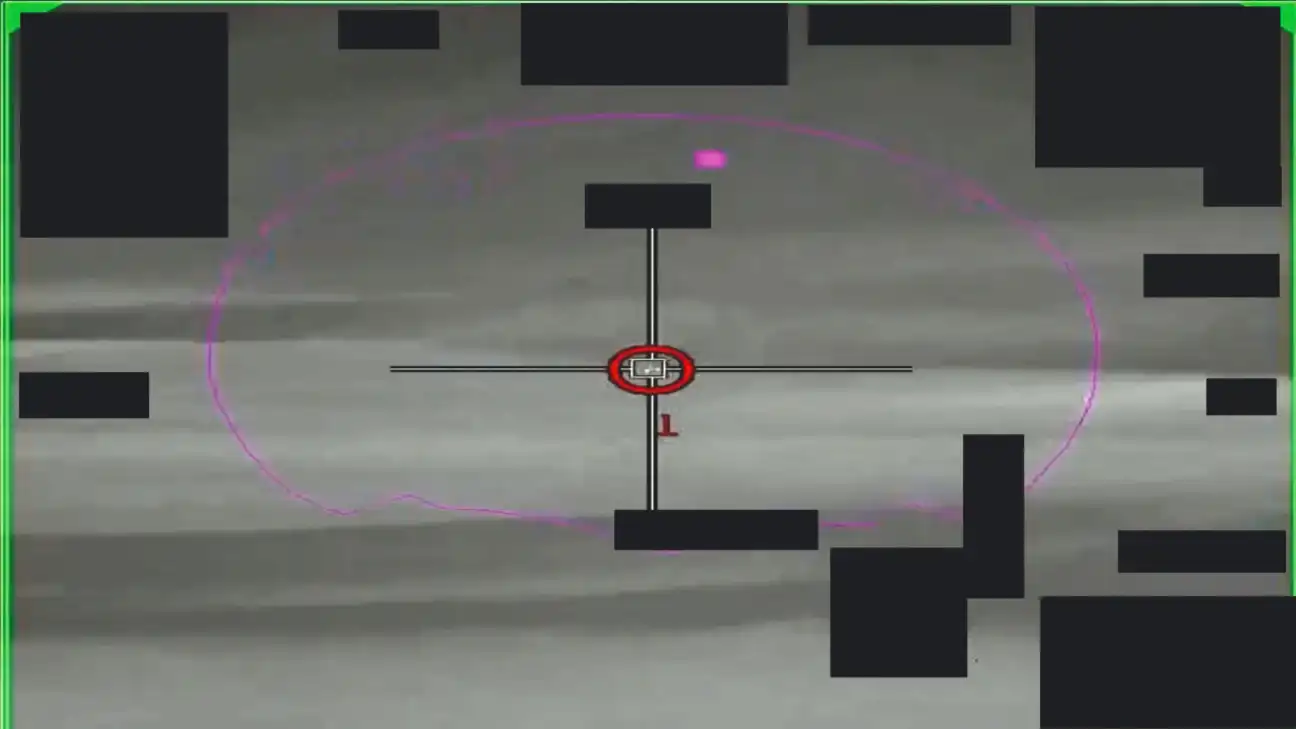
In a bizarre twist of timing that has sent conspiracy theorists into overdrive, the real-world United States government made a major move of its own on the same day the film hit theaters. The Pentagon officially released its third massive batch of declassified files regarding Unidentified Anomalous Phenomena, commonly known as UAPs or UFOs. This unexpected parallel has prompted some online commentators to speculate that the legendary director is working in tandem with federal agencies to “soft-launch” the reality of alien contact to a public that might otherwise panic. While industry insiders dismiss these rumors as a simple marketing coincidence, the simultaneous disclosures have undeniably supercharged public interest in the film.
The thematic depth of the film reflects the director’s own lifelong, sincere fascination with the stars. In a television interview shortly before the film’s release, Spielberg candidly expressed his personal conviction that humanity is not alone, stating his belief that extraterrestrial visitors have been here and remain here. He traced his renewed obsession with the subject to a landmark 2017 national newspaper article that exposed the Pentagon’s highly classified, multi-million-dollar program to track unexplained aerial objects. For a filmmaker whose career has been defined by the unknown, the project represents a mature, post-Cold-War summation of his lifelong curiosity about the cosmos.
Beyond its provocative themes, the movie serves as a showcase for spectacular, traditional craftsmanship. The film reunites Spielberg with legendary composer John Williams, marking the 30th collaboration in their historic five-decade partnership. Williams’s sweeping, atmospheric score works in perfect tandem with the cinematography of Janusz Kamiński, who utilizes moody, shadow-filled lighting to evoke the classic paranoia of 1970s political thrillers. To ensure the story felt grounded in physical reality, the director also relied heavily on practical effects, including building a massive, real-world train sequence to bring the tension of the chase to life.
The high-profile production also stands out for its unique casting process, with the director personally selecting the entire ensemble cast without requiring traditional auditions. Emily Blunt’s performance as the meteorologist has drawn widespread praise from critics, who have highlighted her ability to balance intense emotional vulnerability with the psychological strain of her telepathic powers. The chemistry between Blunt and Josh O’Connor provides a strong human core to what could have easily become a sterile, effects-driven chase movie, ensuring that the audience remains deeply invested in their survival even as the cosmic conspiracy expands.
However, the film’s provocative premise has not escaped significant cultural backlash. Several conservative and religious advocacy groups have publicly criticized the movie, describing it as a direct takedown of traditional faith. These groups object to the narrative’s suggestion that the official confirmation of advanced extraterrestrial intelligence would instantly render classical religious dogmas obsolete. Conversely, supporters of the film argue that Spielberg’s vision is not hostile to faith, but rather explores how human beings would collectively adapt their spiritual and psychological frameworks when confronted with the undeniable proof that they are not the center of the universe.
Ultimately, this science-fiction epic serves as a powerful testament to the enduring public fascination with what lies beyond our world. By combining high-octane Hollywood filmmaking with real-world national security anxieties, the movie has successfully tapped into the modern zeitgeist of institutional distrust and the search for truth. Whether the film represents a fictional warning or a dramatic reflection of ongoing real-world disclosures, it has ensured that the conversation surrounding unexplained aerial objects is no longer confined to the fringes. As the movie continues its dominant run at the global box office, it challenges humanity to confront the ultimate question: are we truly ready to learn the truth?















