

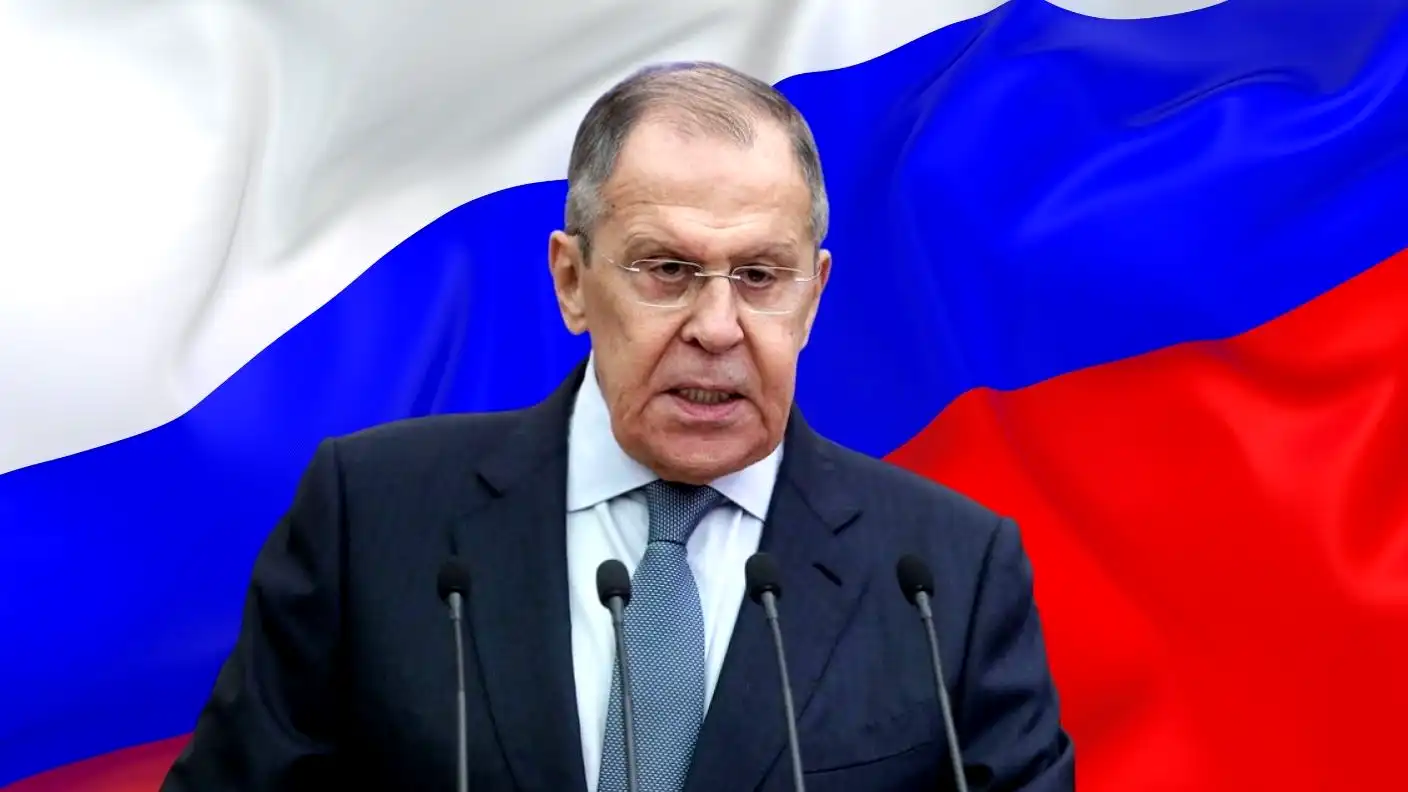
The prospects for a near-term diplomatic settlement in Eastern Europe have suffered a major setback. During a press conference in Moscow, Russian Foreign Minister Sergey Lavrov effectively dismissed recent Ukrainian and European proposals to restart peace talks, signaling that the Kremlin remains entirely focused on battlefield gains. In a blunt assessment, Lavrov declared that developments on the front lines, rather than diplomatic negotiations, would ultimately determine the war’s outcome.
His comments have sent shockwaves through international diplomatic circles, dampening hopes that a temporary ceasefire could take hold before the winter. As both sides prepare for another grueling phase of the war, the conflict is increasingly reverting to a raw test of military endurance, leaving little room for political compromise.
The Catalysts of the Clash: The Zelensky Letter and European Conditions
The sudden hardening of Moscow’s rhetorical stance follows a series of high-profile diplomatic initiatives from Ukraine and its European allies. Over the span of a single weekend, Kyiv and several European capitals attempted to outline a fresh framework to bring the warring parties to the negotiating table.
The Open Letter and the Russian Rejection
The current diplomatic friction intensified after Ukrainian President Volodymyr Zelensky sent an open letter to Russian President Vladimir Putin. Zelensky proposed a direct, face-to-face meeting between the two leaders to discuss an immediate halt to the hostilities. Rather than delivering the letter through private, backchannel diplomatic corridors, the Ukrainian government published the text online and distributed it to international media outlets.
This public approach met with immediate hostility in Moscow. Lavrov criticized the global distribution of the letter, suggesting that such actions indicate Kyiv is more interested in public relations than serious, confidential negotiations.
He stated that polite people do not behave in such a manner and reported that Putin assessed the letter as proof that Ukraine does not want real negotiations. Consequently, the Kremlin dismissed the proposal as a public gimmick rather than a genuine peace offering.
The Joint European Proposal
Shortly after Zelensky published his letter, the leaders of France, Germany, the United Kingdom, and Ukraine issued a joint statement outlining five conditions necessary to establish a just and lasting peace. This European initiative proposed an immediate, comprehensive ceasefire and suggested starting negotiations based on the current line of contact. Essentially, the proposal aimed to freeze the front line to stop the active fighting.
However, the Kremlin gave the European initiative a cold reception. Kremlin spokesperson Dmitry Peskov argued that European leaders were actively undermining their own calls for peace by continuing to provide Ukraine with heavy weapons and financial assistance.
Lavrov echoed this sentiment, arguing that it is impossible to hold serious talks while the West continues to supply Kyiv with intelligence and advanced military hardware. Moscow maintains that any future negotiation must begin with a complete withdrawal of Ukrainian forces from parts of the Donbas region under Russian control, a condition that Ukraine has repeatedly and firmly rejected.
The Anchorage Legacy: The Alaska Summit Understandings
The current diplomatic breakdown also threatens to unravel previous understandings reached between the United States and Russia. Both sides had previously hoped that a change in leadership in Washington could pave the way for a negotiated settlement.
The Ghost of the August 2025 Summit
In his recent statements, Lavrov referred directly to the Anchorage summit held on August 15, 2025. During that meeting, Putin accepted a series of initial proposals from U.S. President Donald Trump outlining preliminary steps to halt the fighting and open a path to structured negotiations.
Lavrov expressed deep frustration that these understandings have failed to translate into a lasting diplomatic framework. He stated that Russia hopes the experience of failed negotiations with the West will not repeat itself in the case of the agreements reached in Alaska.
He blamed the United States for refusing to pressure Kyiv to accept the terms of the Anchorage draft, claiming that if Washington had genuinely promoted its own initiative, both sides would already be at the negotiating table.
The Rubio-Lavrov Discussions and U.S. Policy Shifts
Despite the public friction, some diplomatic communication lines remain open between Moscow and Washington. Lavrov confirmed that he has discussed the results of the initial Istanbul talks with U.S. Secretary of State Marco Rubio.
Rubio has welcomed preliminary agreements to swap prisoners of war and has signaled Washington’s willingness to assist in seeking a settlement.
However, Moscow sees a major contradiction between Trump’s public promises to end the war quickly and his administration’s actual policies. Lavrov pointed out that Rubio’s recent public statements indicate continued, robust U.S. support for Ukraine.
The Russian Foreign Minister complained that despite the shift in the White House, there are essentially no differences left between the approaches of the United States and Europe, as Washington continues to provide intelligence and facilitate arms transfers to Kyiv through European allies.
Ukraine’s Warning: The Lost Chance for Peace
Kyiv has reacted sharply to Moscow’s rejection of its peace proposals. Ukrainian officials warn that by refusing to engage in talks, the Kremlin has missed a crucial opportunity to end the conflict on relatively favorable terms.
The Warning of Andrii Sybiha
Ukrainian Foreign Minister Andrii Sybiha declared that Putin has officially lost his chance to end the war under favorable conditions. Following Putin’s rejection of Zelensky’s open letter, Sybiha warned that Russia’s situation will only deteriorate further as the conflict drags on.
He predicted that the Kremlin would face worsening battlefield losses, a deeper domestic economic recession, and higher domestic inflation if it continues to prioritize military conquest over diplomacy.
Sybiha’s warnings reflect a growing confidence in Kyiv that Ukraine can sustain a long-term war of attrition. While the conflict remains a massive challenge for Ukraine, the country’s domestic defense industry is expanding, and its forces are increasingly capable of launching long-range strikes that damage Russia’s economic and logistical networks.
The Stagnant Front Line
Recent battlefield data support this confidence. Although Russia has committed substantial manpower and equipment to its spring-summer campaign, its ground forces are making very little progress.
During May, Russian forces captured only 14 square kilometers of Ukrainian territory, marking their smallest monthly gain since October 2023. At the same time, Ukrainian forces have achieved localized tactical successes, liberating more territory through counterattacks than they lost to Russian advances.
This slowed Russian advance shows that the Kremlin’s ground forces are struggling to break through Ukraine’s fortified defensive lines. By focusing entirely on battlefield gains rather than diplomacy, Russia is locking itself into a grueling war of attrition, in which it continues to suffer heavy personnel losses with very little physical territory to show for it.
Views: Is a Diplomatic Settlement Dead?
The escalating rhetoric from both Moscow and Kyiv has forced political analysts, military strategists, and financial markets to reevaluate the likelihood of a near-term ceasefire.
The Realist View on Battlefield Supremacy
Many military analysts believe that any attempt to force a ceasefire at this stage would be a major strategic mistake for the West. They argue that Russia’s war of self-destruction has triggered a large-scale structural decline for the Kremlin across economic, military, and geopolitical dimensions.
Sustained military spending is driving high inflation and fiscal strain within Russia, while the country is steadily losing geopolitical influence in regions such as Central Asia and the Caucasus.
From this perspective, premature negotiations would only interrupt Russia’s self-inflicted strategic erosion. If the West forces a settlement now, it risks converting Russia’s structural weakness into a political victory that Moscow could not achieve militarily.
Therefore, these experts advocate for strategic patience, urging Western allies to sustain their military support for Ukraine and allow the battlefield dynamics to run their course.
The Market Assessment
This pessimistic outlook is reflected in global prediction markets and geopolitical forecasting platforms. Following Lavrov’s comments, the market probability of a Russia-Ukraine ceasefire agreement by the end of the year dropped slightly to 45.5%.
More dramatically, the odds of a comprehensive peace deal taking hold by mid-summer fell to just 3.8%.
These market indicators show that investors and political observers view Lavrov’s remarks as a highly significant, negative development for peace prospects. The emphasis on a military resolution rather than diplomatic engagement suggests that both sides are preparing for a long, uninterrupted conflict, making any near-term ceasefire highly unlikely.
Conclusion: The Brutal Logic of the Front Line
Sergey Lavrov’s declaration that soldiers, not talks, will decide the war represents a sober reminder of the brutal logic defining the conflict. Despite the flurry of letters, joint European proposals, and summit draft agreements, neither side is ready to make the fundamental concessions necessary to secure a peace deal.
Russia remains committed to its goal of military conquest, while Ukraine is determined to defend its territory and wear down the aggressor through a war of attrition.
As the diplomatic channels freeze once again, the ultimate decision returns to the trenches and battlefields of Ukraine. Diplomats in Almaty or Geneva will not draw the maps of tomorrow, but the soldiers on the front lines will. In a conflict defined by deep geopolitical rivalry, the raw metrics of military power and industrial endurance have completely eclipsed the art of diplomacy.















