

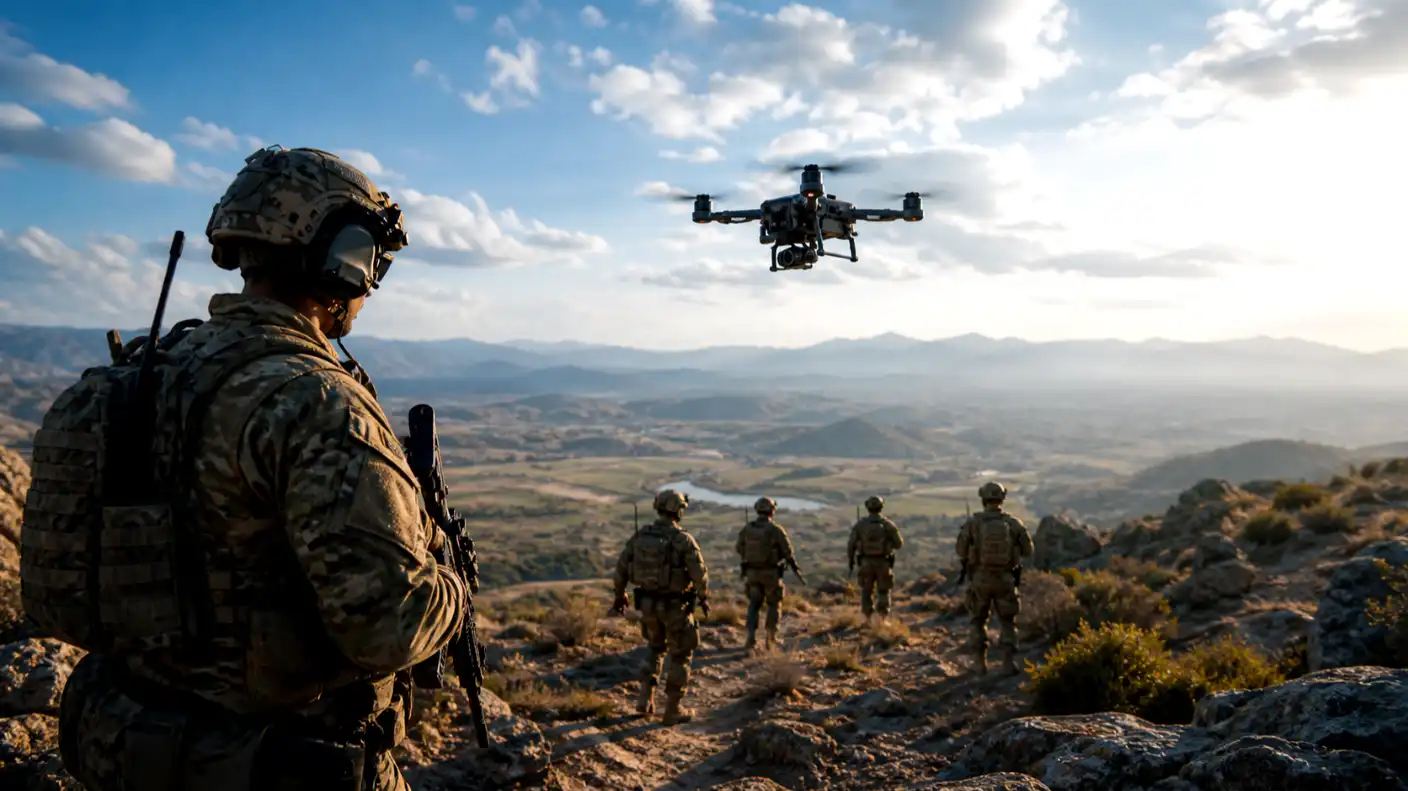
A vibrant new ecosystem of small technology companies is stepping up to help Ukraine defend its borders. On Tuesday, June 2, 2026, international defense observers highlighted how highly innovative startups are deploying autonomous sea drone swarms and uncrewed robot trucks to bolster Ukrainian military units on the front line. Working alongside private accelerators and international investors, these small businesses are transforming the battlefield with low-cost, high-tech weapons that challenge traditional military manufacturing models.
One of the most promising new technologies aims to defend Ukraine’s vital maritime trade routes in the Black Sea. Charles Maher, a former U.S. submarine commander, founded the Danish maritime intelligence and security startup BlueShadow to stop Russian drones from flying undetected near the port city of Odesa. Maher’s company is developing a system that coordinates swarms of autonomous naval vessels to form a protective barrier off the Ukrainian coast. When fully deployed, the system will feature four squadrons of 12 uncrewed vessels operating 10 to 12 kilometers offshore, with the first missile-armed squadron scheduled for deployment by early 2027.
BlueShadow is just one of many startups working with Defence Builder, a private-sector accelerator that helps early-stage defense technology companies scale up and prepare for international markets. Line Rindvig, the Chief Executive Officer of Defence Builder, explained that the accelerator provides startups with initial funding of $10,000 alongside a specialized four-month training program. In exchange for a small equity stake, Defence Builder connects innovators with military units to provide critical, real-world feedback on their products. This system ensures that soldiers on the ground receive practical, low-cost weapons rapidly.
The sheer scale of Ukraine’s tech boom is unprecedented. Rindvig noted that before the full-scale invasion began in 2022, Ukraine hosted fewer than 10 specialized defense companies. By June 2026, that figure has exploded to more than 1,500 startups, with the vast majority focusing on drones, robotic land vehicles, and uncrewed sea vessels. Backed by $498 million in venture capital investments and government grants recorded in 2025, Ukrainian arms makers are racing to align their technology with NATO standards, opening up lucrative co-production opportunities with Western allies.
The rapid development of robotic land systems has also attracted significant interest from U.S. technology companies. San Francisco-based startup Foundation Future Industries recently tested its autonomous robotic vehicles in active combat zones in Ukraine. In early 2026, the company sent two Phantom MK-1 robots to the front line to handle highly dangerous logistics, cargo delivery, and casualty evacuation missions. The U.S. startup, which has secured up to $24 million in U.S. government research contracts, hopes to replace human personnel in high-risk zones, keeping frontline soldiers out of immediate danger.
The American startup has also captured political headlines due to its high-profile leadership team. Eric Trump, the son of U.S. President Donald Trump, serves as a strategic adviser to Foundation Future Industries, helping the company navigate complex federal contracts. While the initial Phantom MK-1 model had limitations, including a payload capacity of only 20 kilograms and limited water resistance, the startup plans to send an upgraded Phantom 2 model to Ukraine later this year. The new model will feature twice the payload capacity and significantly improved durability for harsh winter operations.
The absolute holy grail of modern drone warfare is the integration of artificial intelligence to coordinate large-scale drone swarms. Ukrainian startup Swarmer is leading this charge, developing software that allows a single human operator to coordinate dozens of drones simultaneously. The AI handles flight paths and target identification, while the human operator simply authorizes the final strike. Swarmer recently raised $15 million in a record-breaking investment round backed by several prominent U.S. venture capital firms, representing the single-largest private investment in a Ukrainian defense company since the war began.
Deputy Prime Minister for Digital Transformation Mykhailo Fedorov has consistently praised these technological breakthroughs, stating that domestic innovations have forever changed the perception of modern technological warfare. Ukraine has pioneered the use of drone technology out of sheer necessity, turning simple commercial quadcopters into highly effective precision weapons. However, keeping pace with Russia’s massive industrial defense complex requires constant innovation. While President Volodymyr Zelensky has stated that Ukraine has the technical capacity to produce up to 8 million drones annually, the country remains highly dependent on foreign private investments to fund these massive production targets.
The rapid maturation of Ukraine’s defense tech ecosystem is also catching the attention of NATO commanders. Western militaries are watching how these uncrewed systems perform in a high-intensity electronic warfare environment, where Russian jammers frequently disable standard commercial GPS and radio signals. By testing their products in active combat, Ukrainian and international startups are generating priceless operational data that will shape the future of Western military doctrine.
Ultimately, the rise of agile defense startups proves that scientific laboratories and software centers decide modern conflicts as much as physical battlefields. By combining private capital, global tech talent, and immediate feedback from frontline troops, Ukraine is building a highly resilient defense network. As these robotic trucks and sea drone swarms prepare for full deployment, they are proving that small, innovative startups can successfully shore up national defenses against a much larger, traditionally equipped adversary.















