

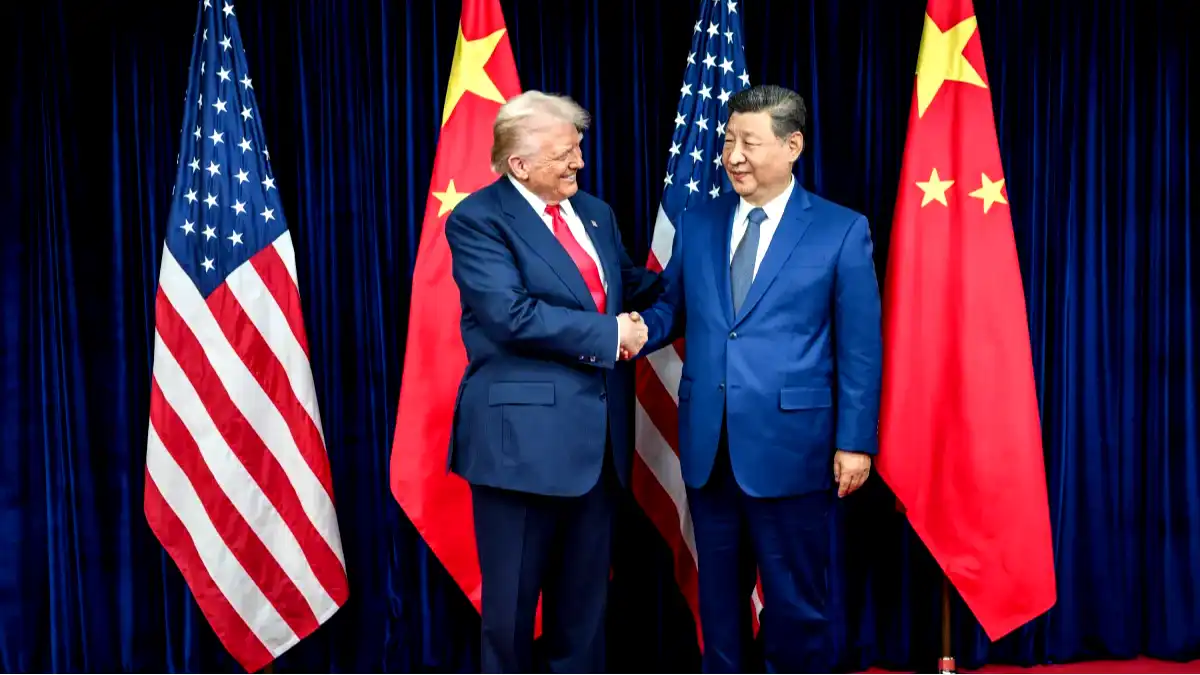
United States President Donald Trump arrived in Beijing on Wednesday to meet with Chinese President Xi Jinping. The massive United States and Israeli war against Iran overshadows this important visit. Trump plans to ask China to help stop the expensive and unpopular conflict. He and Israel started this war on February 28. However, political experts believe Trump will struggle to get the support he actually wants from the Chinese government.
This dangerous conflict quickly changes old friendships and alliances across the Middle East. For example, Israeli leaders announced that Prime Minister Benjamin Netanyahu secretly traveled to the United Arab Emirates in March. They claim he met with Sheikh Mohammed bin Zayed and achieved a huge breakthrough in their relationship. The two countries restored ties in 2020 through the Abraham Accords. However, the United Arab Emirates denied the secret meeting outright. The foreign ministry released a statement calling the Israeli claims completely fake and unfounded.
The ongoing war brings heavy consequences for the United Arab Emirates. Iran recently attacked the country multiple times as payback for the joint United States and Israeli military strikes. Iranian leaders sent harsh threats to their neighbors across the water. Foreign Minister Abbas Araqchi posted a strict warning on the social media platform X. He warned that anyone who colludes with Israel commits an unforgivable crime and will face severe punishment.
Violence continues to spread far beyond Iran and Israel. Secret military operations now involve several other Gulf nations. News reporters discovered that Saudi Arabian fighter jets recently bombed militias inside Iraq. Iran actively funds and supports these specific militia groups. Additionally, military forces in Kuwait launched their own retaliatory missile strikes into Iraqi territory. These secret attacks show a much larger regional war developing in the shadows.
Meanwhile, the Iranian government heavily controls the important Strait of Hormuz. Before the war began, this narrow waterway handled exactly 20% of the world’s daily oil supply. Now, Iran makes special deals with countries like Iraq and Pakistan. Iran allows these specific nations to safely ship their oil and liquefied natural gas through its waters. Sources say other countries want to strike similar shipping deals to move their valuable chemical and agricultural products safely.
Iranian officials view their tight control of the strait as a permanent goal. An Iranian army spokesperson said managing the water traffic will make the country incredibly rich. He claims the new shipping fees could easily generate twice as much money as Iran usually makes from selling oil. The spokesperson told local news agencies that Iran will never retreat from the strait even after the war officially ends.
A shaky ceasefire began over 1 month ago, but diplomats have yet to find a permanent solution. The United States demands that Iran destroy its nuclear weapons program and release its grip on the shipping strait. On the other side, Iran demands heavy financial compensation for the war damage. Iran also wants the United States to end the strict blockade of Iranian shipping ports. Furthermore, Iran demands that Israel stop fighting Hezbollah forces in Lebanon. President Trump quickly rejected all the Iranian demands and called them complete garbage.
Vice President JD Vance spoke to reporters at the White House on Wednesday about the ongoing peace talks. He thinks the negotiators make slow but steady progress. Vance said the United States only has one simple red line. The president must feel certain that Iran will never build a nuclear weapon. Iran constantly denies that it wants to build these dangerous bombs.
The global energy market suffers greatly from this violent conflict. The International Energy Agency released a scary report on Wednesday. The agency predicts that global oil supplies will drop by 3.9 million barrels per day in 2026. The world has already lost more than 1 billion barrels of oil from the Middle East because of the war. This massive shortage will force gas prices higher for normal people everywhere.
Secretary of State Marco Rubio explained the American strategy during a television interview. He spoke from Air Force One while flying to China. Rubio said the United States demands that China force Iran to stop its aggression in the Persian Gulf. He warned the Chinese government that helping Iran would seriously damage their massive trade relationship with the United States.
To show some agreement, American and Chinese leaders decided last month that no country should impose tolls in the strait. China buys huge amounts of Iranian oil and stays close friends with Tehran, but China did not disagree with this American rule. Right after this meeting, ship tracking data showed a massive Chinese supertanker crossing the strait on Wednesday. The ship carried exactly 2 million barrels of Iraqi crude oil. This marks the third time a huge Chinese tanker crossed the waterway since the war started.















