

A federal court in Massachusetts has delivered a major legal defeat to the White House’s immigration agenda. In a decisive ruling, U.S. District Judge Leo Sorokin struck down a controversial executive policy that required employers to pay a staggering $100,000 fee for certain new H-1B visa petitions. The judge declared the fee unlawful and ordered its immediate invalidation, concluding that the payment requirement constituted an unauthorized tax that only Congress may levy.
The decision represents a major victory for the U.S. technology sector and provides an immediate reprieve for businesses that rely heavily on highly skilled foreign workers. It also establishes a clear limit on how far the executive branch can go in using financial hurdles to restrict immigration programs created by Congress.
The Proclamation and the Staggering Price Hike
The legal dispute stems from an aggressive policy shift aimed at limiting the entry of foreign professionals into the United States.
The September Proclamation
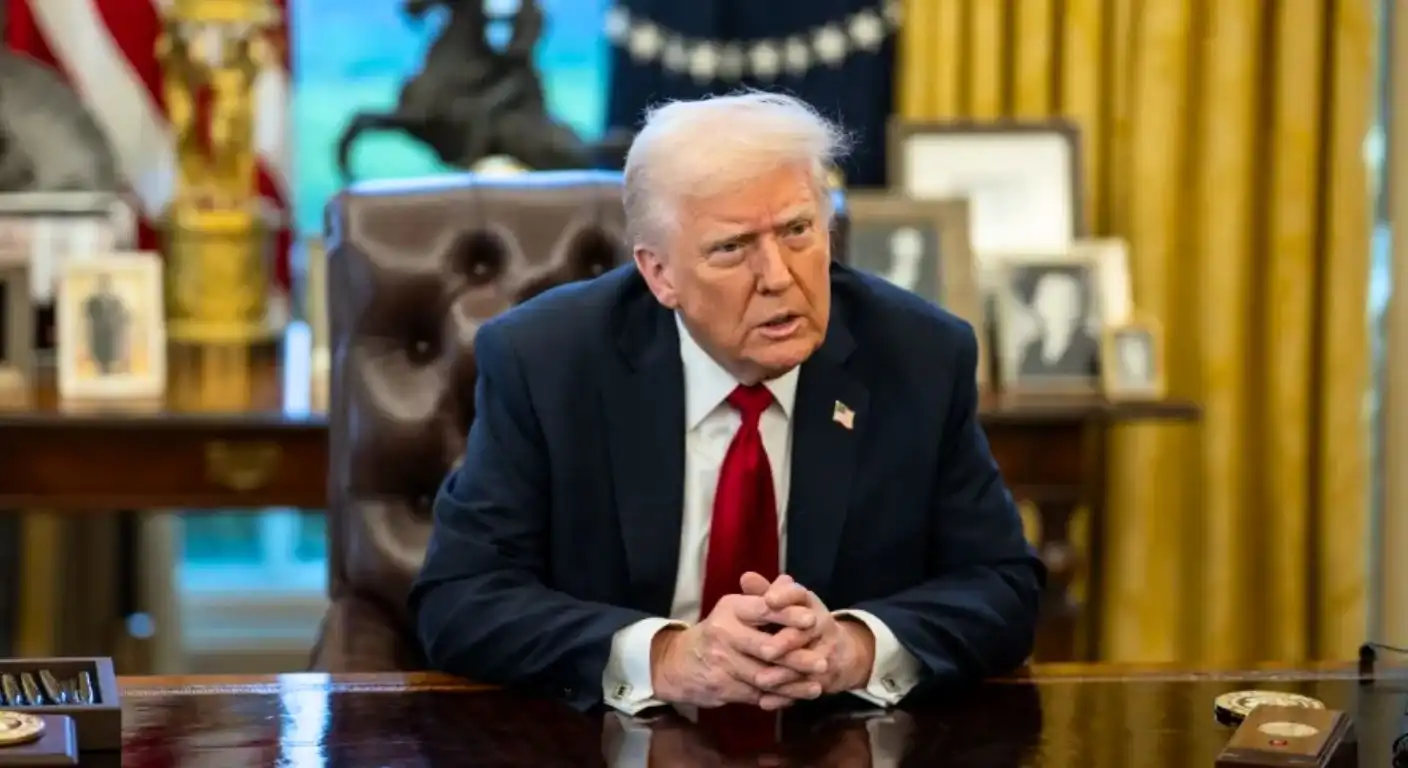
The controversy began when President Donald Trump signed a presidential proclamation to overhaul the H-1B program’s fee structure. The executive order dramatically raised the filing fee for new H-1B applicants seeking entry to the United States from abroad, setting the price at an unprecedented $100,000 per petition.
Before the proclamation, employers typically paid between $2,000 and $5,000 in standard filing, fraud prevention, and training fees, depending on the size of the company. By increasing the entry cost by several thousand percent, the administration aimed to discourage businesses from using the program, arguing that the hiring of foreign specialists displaces qualified American workers and suppresses local wages.
The Practical Impact on Tech Hiring
Rather than simply regulating the program, the $100,000 fee served as a virtual barrier to high-skilled immigration. The H-1B program, established by Congress in 1990, allows U.S. companies to hire college-educated foreign workers in specialized fields, such as software engineering, biotechnology, and data science, for periods of up to six years.
Major technology companies like Amazon, Microsoft, Meta, Apple, and Tata Consultancy Services rely heavily on these visas to fill critical talent gaps. The massive fee increase forced many mid-sized and startup firms to abandon their hiring plans entirely.
The policy’s cooling effect is clearly evident in the government’s own data. According to court filings submitted by the administration, the U.S. Citizenship and Immigration Services had received only 85 payments of the $100,000 fee. This extremely low number confirmed that the fee was not functioning as a standard regulatory charge but as a financial barrier that effectively brought high-skilled immigration to a halt.
The Legal Battle: States and Business Groups Fight Back
The extreme nature of the fee hike triggered swift legal opposition from both state governments and the business community, leading to a coordinated effort to dismantle the policy in federal court.
The Democratic Coalition’s Lawsuit
The ruling in Boston came in a lawsuit filed by a coalition of 20 Democratic state attorneys general, led by California and Massachusetts. The states argued that the administration lacked the legal authority to impose such a massive financial burden on employers unilaterally.
They pointed out that state-funded institutions, including public universities, research hospitals, and regional healthcare networks, rely on the H-1B program to recruit medical researchers, professors, and specialized physicians. By effectively blocking these hires, the federal policy caused direct, measurable harm to state economies and public services.
The Chamber of Commerce and Parallel Challenges
The states’ lawsuit is part of a broader, multi-pronged legal attack against the administration’s immigration policies. The U.S. Chamber of Commerce and a nurse recruiting firm are pursuing separate legal challenges against the $100,000 fee.
The legal arguments against the visa fee received a major boost earlier this year when the U.S. Supreme Court struck down President Trump’s global tariffs. In that landmark decision, the Supreme Court ruled that the Constitution grants the power to raise revenue and levy taxes exclusively to Congress, meaning the president cannot use executive emergency powers to bypass the legislature’s control over public funds.
This Supreme Court ruling strongly reinforced the arguments of the business groups, giving the district court a clear legal precedent for striking down the visa fee.
Decoding the Judgment: Why a Fee is Actually a Tax
In his written opinion, Judge Leo Sorokin focused on the constitutional division of powers, explaining why the administration’s legal defense of the fee could not stand.
The “Tax versus Penalty” Legal Distinction
The administration’s defense rested on the argument that the $100,000 charge was not a tax, but a regulatory monetary penalty. Government attorneys argued that under Sections 212(f) and 215(a) of the Immigration and Nationality Act, the president has broad authority to restrict the entry of foreign nationals into the United States. They claimed that this authority includes the power to impose substantial financial penalties to discourage entry and protect the domestic labor market.
Judge Sorokin rejected this argument. He concluded that the substance, scale, and application of the $100,000 payment revealed that it operated as a tax, regardless of what label the administration chose to put on it.
He wrote that a regulatory penalty is designed to punish specific unlawful conduct or cover the direct administrative costs of a program. In contrast, the $100,000 fee was a broad, revenue-raising mechanism imposed on a perfectly legal activity, which fits the definition of a tax.
The Constitutional Separation of Powers
Because the payment requirement constitutes a tax, the president cannot implement it without explicit authorization from Congress. Under Article I of the U.S. Constitution, the legislature holds the exclusive power of the purse.
The judge ruled that Sections 212(f) and 215(a) of the Immigration and Nationality Act do not delegate Congress’s taxing power to the executive branch. While the president may have the authority to suspend the entry of certain individuals in national security emergencies, he cannot use that authority to levy a $100,000 tax on American businesses.
Furthermore, the judge emphasized the legality of the visa program itself.
“Hiring workers pursuant to the H-1B program is plainly lawful,” Sorokin wrote.
Because Congress created and authorized the H-1B program, the executive branch cannot, in practice, use a prohibitively expensive fee to dismantle a system established by federal law.
Broader Context: The Shifting Rules of the H-1B Landscape
While the elimination of the $100,000 fee provides immense relief to employers, the H-1B program remains subject to several other significant regulatory changes implemented by the administration.
The Wage-Weighted Lottery System
The $100,000 fee was only one part of a larger, systemic effort to restrict the visa program. The administration has also finalized a major rule change that completely alters how the annual H-1B lottery is conducted.
Under the new wage-weighted lottery system, the government prioritizes applicants based on their offered salary levels. Workers who receive Level IV wages receive four lottery entries, Level III wages receive three entries, Level II wages receive two entries, and Level I wages receive only one entry.
This system dramatically increases the selection odds for the highest-paid foreign specialists by up to 107% while making it exceptionally difficult for entry-level foreign graduates to secure visas, shifting the program’s focus toward elite, high-earning professionals.
Social Media Vetting and Enforcement Initiatives
In addition to the lottery changes, the State Department has implemented strict social media vetting for all H-1B applicants and their family members, requiring them to make their social media profiles public for consular review. This requirement has caused massive processing delays at consulates worldwide, with some interview appointments in India significantly delayed.
At the same time, the Department of Labor has launched “Project Firewall,” an aggressive enforcement initiative designed to audit H-1B employers and investigate compliance with prevailing wage requirements, ensuring that companies do not use foreign labor to underpay workers.
Views: The Clash Over Global Talent and Domestic Jobs
The federal court’s ruling has reignited the intense debate over the role of skilled foreign workers in the American economy.
The Tech Sector and Business Perspective
U.S. technology companies and business associations welcomed the ruling, arguing that the $100,000 fee was a blunt, self-defeating policy that threatened American innovation. Tech advocates argue that the United States faces a persistent shortage of highly specialized engineers and scientists, particularly in rapidly growing fields like artificial intelligence, quantum computing, and advanced manufacturing.
They point out that if American companies are blocked from hiring global talent locally due to exorbitant fees, they will not simply hire Americans instead. Rather, they will open research and development centers in countries with more welcoming immigration policies, such as Canada, the United Kingdom, or India, effectively exporting high-paying jobs and intellectual property away from the United States.
The Protectionist and Nationalist Perspective
On the other side of the debate, immigration hawks and nationalist policy groups argue that the H-1B program is widely abused by outsourcing firms to replace American workers with cheaper foreign labor. They believe that many tech companies use the program to avoid raising wages for domestic workers and to bypass local recruitment efforts.
Supporters of the administration’s fee argue that a high price tag was the only realistic way to force multinational corporations to invest in training the domestic workforce. They contend that if companies are truly hiring “irreplaceable” global geniuses, they should be willing to pay a $100,000 premium to do so, and that the judge’s ruling strips the government of a vital tool to protect American jobs and wages.
Conclusion: Executive Limits and the Future of Skilled Immigration
The federal court’s decision to strike down the $100,000 H-1B visa fee serves as a significant reminder of the limits of executive authority in the United States. While the administration has wide latitude to enforce immigration laws and manage border security, the court has made it clear that the president cannot use executive orders to levy unauthorized taxes or unilaterally dismantle programs established by Congress.
Although the government is highly likely to appeal the decision to a federal appeals court, the district court’s ruling provides immediate stability to U.S. employers as they navigate their hiring plans for the year. By preserving the H-1B program as a legally viable pathway for international specialists, the ruling ensures that the United States remains an active player in the global race for high-tech talent, even as the broader political debate over immigration continues to divide the nation.















