
South Korea and the United States have agreed to fast-track landmark nuclear cooperation initiatives, taking a major step toward reshaping the strategic military balance in East Asia. Following high-level bilateral meetings in Seoul on Tuesday and Wednesday, June 2 and 3, 2026, the U.S. State Department confirmed that both nations committed to delivering tangible outcomes as quickly as possible. The discussions focused on three highly sensitive security and energy objectives: building nuclear-powered submarines for the South Korean navy, securing domestic civil uranium enrichment capabilities, and establishing spent nuclear fuel reprocessing facilities on the peninsula.
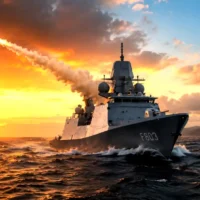
The legislative and military push comes at a critical moment when submarines have emerged as indispensable strategic assets. For decades, South Korea’s military planners have quietly lobbied Washington to lift restrictions on its naval propulsion capabilities, particularly regarding the development of its own nuclear submarine program. Unlike conventional diesel-electric vessels, which must surface frequently to recharge their batteries, nuclear-powered submarines can remain submerged for months at a time. This near-limitless endurance allows them to travel thousands of miles undetected, providing a critical deterrent against regional adversaries. Under the new agreement, Washington is formally opening the door to this technology transfer, marking a historic shift in U.S. non-proliferation policy.
At the same time, the bilateral discussions addressed South Korea’s longstanding demand to secure independent civilian-grade uranium enrichment capabilities. Under current bilateral treaties, Seoul cannot enrich uranium or reprocess spent nuclear fuel without explicit, case-by-case authorization from Washington, a restriction designed to prevent nuclear weapons proliferation. Shifting these rules to allow domestic enrichment and reprocessing will give South Korea greater control over its civil nuclear energy sector. It will also allow the country to recycle its growing stockpile of spent nuclear fuel, resolving a massive environmental and logistical bottleneck.
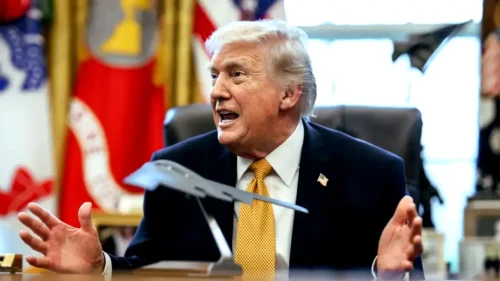
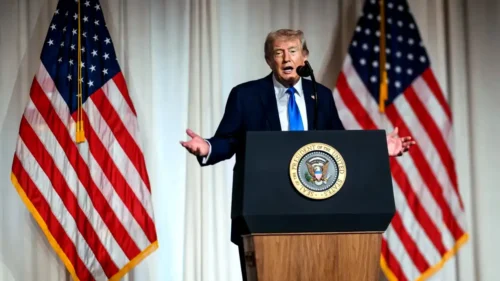
This week’s meetings in Seoul did not occur in a vacuum; they represent the execution of a prior strategic framework that the two leaders negotiated late last year. In late October, South Korean President Lee Jae Myung and U.S. President Donald Trump met for a high-profile summit in Washington, where they released a comprehensive joint fact sheet. This document outlined a series of sweeping bilateral agreements on security, trade, and investment. By putting the nuclear cooperation initiatives onto an active development timeline, negotiators are turning those broad political promises into concrete military and industrial realities.
The high-level delegations attending the Seoul meetings highlight the immense strategic importance that both capitals place on these nuclear initiatives—South Korea’s First Vice Foreign Minister Park Yoon-joo and the U.S. Under Secretary of State for Political Affairs Allison Hooker led the respective teams. Crucially, the talks featured a highly coordinated interagency effort, bringing together senior representatives from Seoul’s presidential National Security Office and the White House National Security Council, as well as defense and energy ministry officials from both nations, ensuring that any technical agreements align with broader national security policies.
The decision to accelerate South Korea’s nuclear capabilities reflects a rapidly deteriorating security environment in the Western Pacific. Over the past year, regional tensions have surged due to China’s massive military expansion and North Korea’s continuous missile tests. Faced with these mounting challenges, the Trump administration has increasingly sought to strengthen its regional alliances by sharing highly restricted defense technologies. By helping South Korea build nuclear-powered submarines, Washington is establishing a powerful, highly capable local partner to help share the burden of regional deterrence and secure vital maritime shipping lanes.
Industry analysts point out that this newly announced cooperation mirrors the historic 2021 AUKUS agreement, under which the United States and the United Kingdom agreed to supply Australia with conventional, nuclear-powered submarines. While many expected AUKUS to remain a unique, one-off exception to global non-proliferation rules, the latest U.S.-South Korea talks show that Washington is willing to deploy this technology-transfer strategy to other close allies. For South Korea, securing a similar arrangement elevates its technological standing, placing it among a highly exclusive club of nations with access to nuclear propulsion.
Despite the highly optimistic tone of the joint statement, the two nations must still navigate complex international legal and regulatory hurdles before any metal is cut or fuel is enriched. International atomic energy guidelines place strict restrictions on the transfer of nuclear fuel for military propulsion, even when the fuel is not used to build weapons. Negotiators must design a highly specialized verification and monitoring framework to prove to the international community that South Korea’s submarine reactor program will not divert enriched material to a weapons program, a diplomatic challenge that will require intense, ongoing consultations.
In the end, the successful completion of the Seoul bilateral talks signals a fundamental transformation in the U.S.-South Korea alliance. As both nations commit to working toward delivering tangible outcomes as quickly as possible, they are building a highly resilient, modern security partnership capable of meeting the challenges of the next decade. By allowing South Korea to pursue its own nuclear submarines and civil enrichment, Washington is proving that true partnership requires trusting allies with the most advanced technologies, setting a new standard for international security and strategic cooperation in East Asia.