

A high-stakes military emergency in the Middle East has culminated in a historic, technological milestone for the United States Armed Forces. On Tuesday, June 9, 2026, a U.S. Army attack helicopter crashed into the strategic waters near the Strait of Hormuz during a routine maritime patrol. Following a rapid emergency search, an advanced military surface drone successfully rescued both crew members from the sea, marking a potential historical first for the U.S. military. Speaking to reporters shortly after the rescue, U.S. President Donald Trump confirmed that both pilots survived the harrowing crash without suffering any injuries and remain in stable condition.
President Trump acknowledged the helicopter crash during an impromptu press briefing on the runway of John F. Kennedy International Airport in New York. Trump, who was returning to Washington after attending Game Three of the NBA Finals, sought to downplay any immediate panic over a potential new escalation in the region. He reassured the public that both pilots are fine and that nobody sustained injuries during the forced water landing. Trump added that the White House and the Department of Defense plan to issue a comprehensive, formal report detailing the exact circumstances of the incident once investigators complete their initial review.
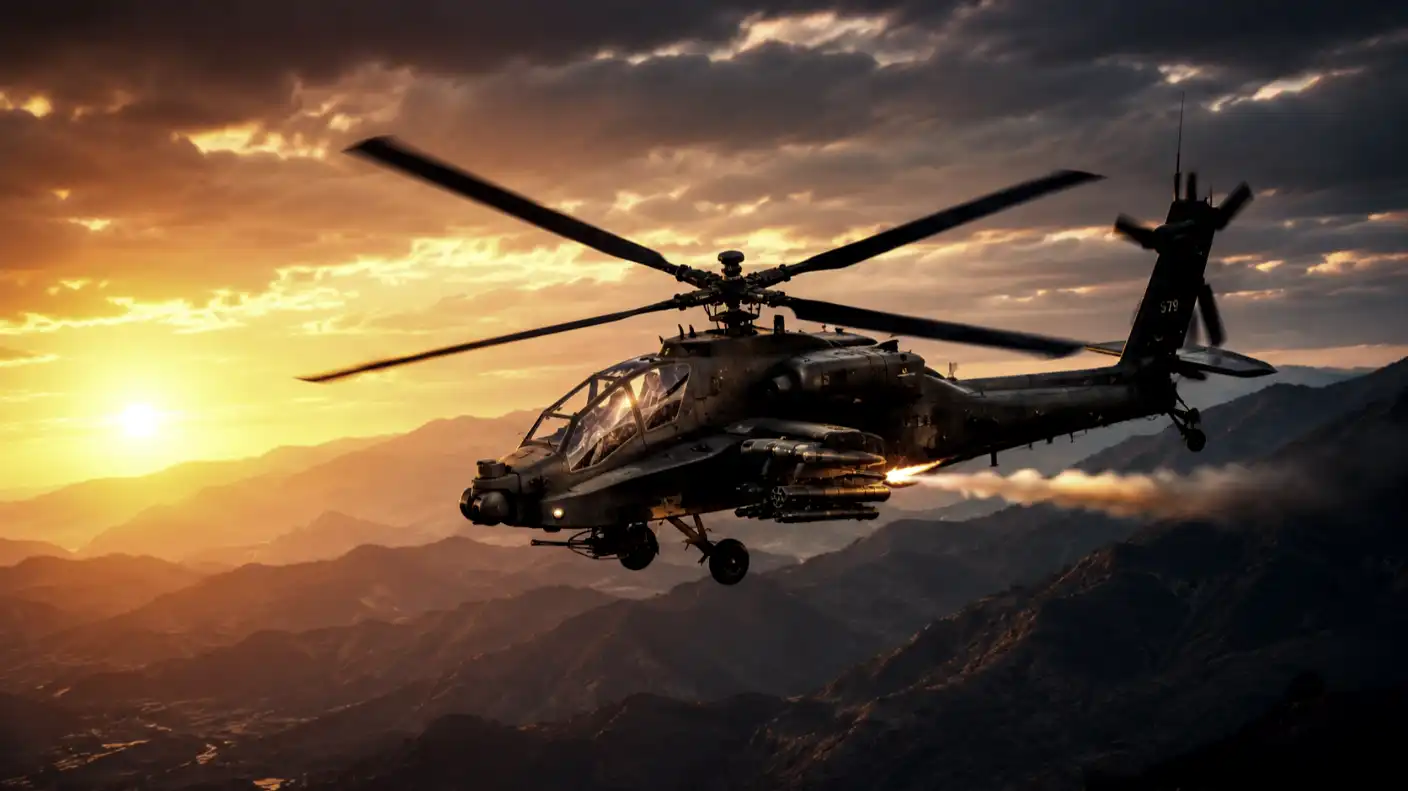
The downed aircraft was a Boeing-manufactured AH-64 Apache, a heavily armed attack helicopter that U.S. Central Command regularly deploys to patrol the volatile waters of the Persian Gulf. According to official military dispatches, the Apache went down at approximately 3:00 AM local time on Tuesday near the coast of Oman. The crew was performing a standard aerial surveillance mission to monitor shipping lanes near the entrance of the Strait of Hormuz. While the military has launched a formal investigation into the crash, officials have not yet determined whether the helicopter suffered a mechanical failure, encountered severe weather, or fell victim to hostile Iranian ground fire.
What makes this incident particularly groundbreaking is the unprecedented manner of the rescue. Following the crash, U.S. Central Command immediately deployed search-and-rescue assets, including Task Force 59, a specialized naval unit focused on integrating artificial intelligence and unmanned systems into maritime operations. Within approximately two hours of the crash, an advanced sea surface drone operated by Task Force 59 located the downed crew members and safely pulled them from the water. Military analysts note that while unmanned aerial vehicles frequently assist in search missions, this operation represents the first time the U.S. military has successfully used a robotic surface drone to execute a physical sea rescue.
The crash represents a significant milestone in the ongoing, three-month-old war between the United States and Iran, which originally erupted on February 28, 2026. This incident marks the first confirmed loss of a U.S. Apache attack helicopter since the outbreak of hostilities. While the U.S. military has maintained a dominant air presence, the conflict has still exacted a heavy toll on unmanned assets. Iranian air defense units claim to have shot down approximately 30 U.S. MQ-9 Reaper drones and several manned fighter jets over the past three months, demonstrating the formidable nature of Tehran’s anti-aircraft capabilities along the narrow waterway.
The downed Apache was executing a critical mission linked to the ongoing, high-stakes blockade of the Strait of Hormuz. Following Iran’s initial attempts to choke off global shipping, the United States enforced its own aggressive naval blockade on April 13, prohibiting any commercial vessels from entering or leaving Iranian ports. Since the blockade began, U.S. warships and patrol helicopters have intercepted and turned back 134 vessels, while disabling seven additional ships that ignored direct warnings. This maritime chokehold has severely disrupted global trade, driving up energy and food prices worldwide and shaving nearly 1.5% off global economic growth forecasts.
The helicopter crash occurred amidst extreme geopolitical volatility in the region, coming just one day after Iran and Israel agreed to halt direct attacks on each other. The prior weekend saw the most direct, violent confrontation between the two regional superpowers since a temporary ceasefire took effect on April 8. On Sunday evening, Iran launched a massive barrage of ballistic missiles targeting Israeli military bases, calling the strikes direct retaliation for an Israeli bombing on the outskirts of Beirut. Israel immediately responded by launching heavy airstrikes against Iranian air defense systems and a key petrochemical plant, killing at least two Iranian military personnel.
Despite the sudden military flare-up, President Trump expressed strong optimism that his administration could still secure a permanent peace agreement to end the war. Speaking at the airport on Monday night, Trump claimed that both Iran and Israel are actively seeking an immediate ceasefire because the economic and military costs of the conflict have become unsustainable. Trump even hinted that he could present a breakthrough strategic peace accord within a few days, though he declined to provide specific details. However, political analysts remain highly skeptical, noting that Trump faces record-low approval ratings ahead of the upcoming November midterm elections.
As naval investigators continue to examine the wreckage of the downed Apache, the successful rescue of the two pilots stands as a rare bright spot in a highly dangerous conflict. The pioneering use of a robotic surface drone to save American soldiers in the middle of a war zone proves that unmanned technology will play an increasingly vital role in future military operations. Until Washington can translate the current, tenuous ceasefire into a permanent diplomatic treaty, the Strait of Hormuz will remain a highly volatile flashpoint, requiring constant vigilance and advanced technology to protect the lives of those patrolling its skies.















