

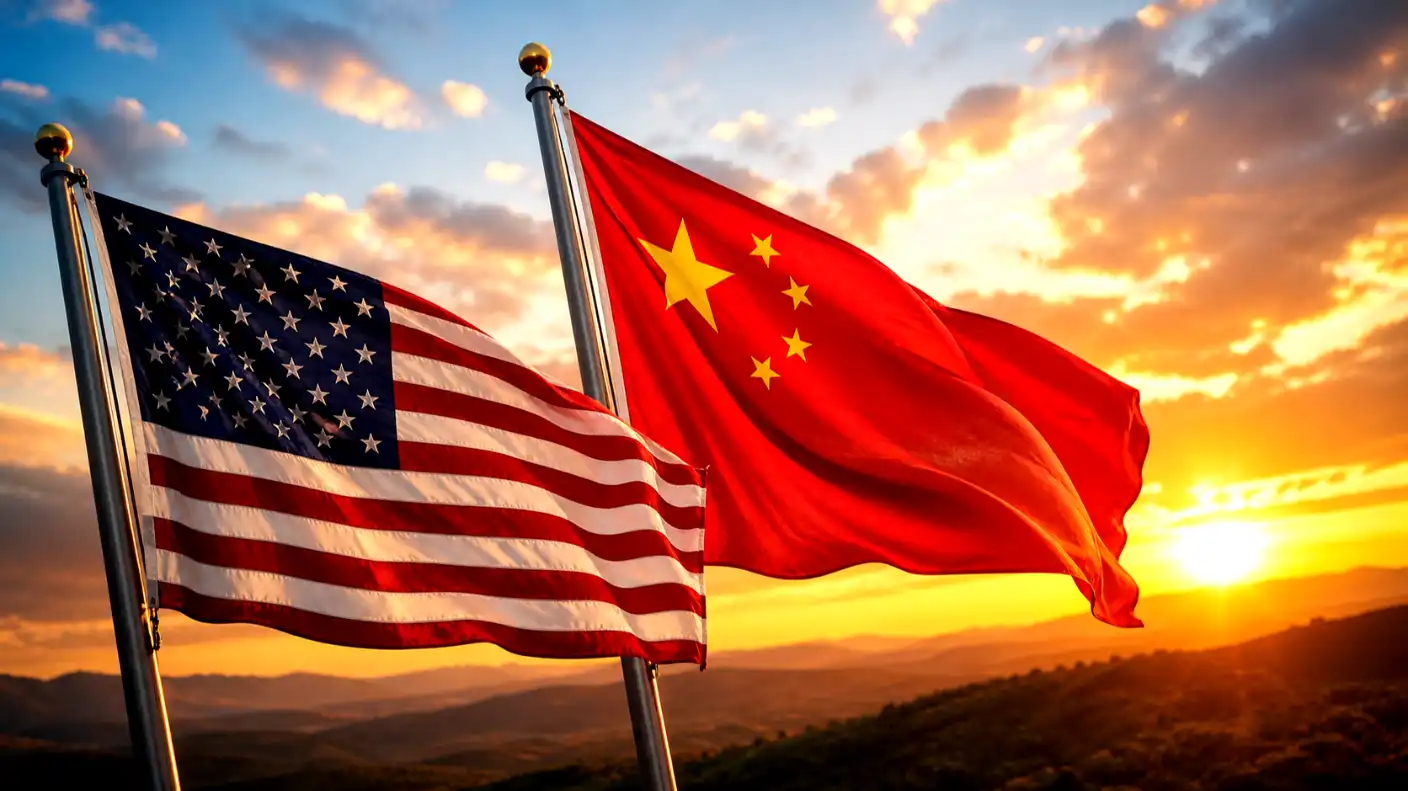
The global landscape features intense, shifting competition between the world’s two biggest powers. The United States and China together generate more than 42% of global economic output. Their relationship dictates the flow of international trade, the direction of technological innovation, and the stability of global security.
As both nations navigate economic friction, deep-seated supply chain issues, and regional disputes, they are carving out a new path that balances intense competition with periods of calculated diplomacy. This article analyzes the economic, technological, and strategic metrics that define this rivalry, presenting both concrete data and divergent perspectives from global policymakers.
The Hard Numbers: Decoding Nominal and PPP GDP
Economists frequently debate which nation holds the title of the world’s largest economy. The answer depends entirely on the metric one chooses to emphasize. The global economy is projected to reach approximately $126 trillion. The United States and China continue to dominate this economic landscape, leaving other major economies far behind.
The Nominal GDP Calculation
When evaluating economies using nominal Gross Domestic Product, which measures national output at prevailing market exchange rates, the United States remains the global leader. According to the International Monetary Fund, U.S. nominal GDP will reach $32.38 trillion. China ranks second with a nominal GDP of $20.85 trillion.
By this standard, the American economy is roughly 1.55 times as large as China’s. This gap has widened slightly over the past few years, driven by strong consumer spending in the U.S. and a weaker Chinese yuan.
The Purchasing Power Parity Reality
The narrative reverses when adjusting for the local cost of living using Purchasing Power Parity. On a Purchasing Power Parity basis, China’s economy stands at approximately $43.49 trillion. The United States ranks second with a Purchasing Power Parity GDP of $31.82 trillion.
China surpassed the United States by this metric in 2014 and has steadily expanded its lead. The discrepancy between nominal and Purchasing Power Parity figures reflects the lower cost of goods, services, and labor within China, allowing domestic capital to go much further within its borders.
The Divergence in Individual Wealth and Growth
A massive population disparity influences how these macroeconomic numbers translate into individual citizens’ lives. China’s population stands at roughly 1.41 billion, while the United States has approximately 345 million residents. This means the per capita wealth gap remains vast.
The nominal GDP per capita in the United States reached a record $94,430, placing the nation eighth globally. In contrast, China’s nominal GDP per capita stands at $14,874, ranking the country 77th in the world.
While the average American enjoys a standard of living several times higher than that of the average Chinese citizen, China continues to grow faster. The International Monetary Fund expects China’s real GDP to expand by 4.4%, while projecting U.S. growth at a respectable but slower rate of 2.3%.
Some economic forecasters suggest that China’s nominal GDP may not surpass that of the United States until 2040, a significant delay from earlier predictions of 2028 or 2030, owing to structural challenges in China’s domestic real estate market and demographic aging.
The Summit: Designing Strategic Stability
President Donald Trump traveled to Beijing for a highly anticipated summit with Chinese President Xi Jinping—the meeting aimed to stabilize bilateral trade and establish boundaries for their ongoing competition.
The Concept of Managed Trade
The Beijing summit produced a new, mutually beneficial framework that both leaders termed a constructive relationship of strategic stability. Rather than pursuing a standard free-trade agreement, the two nations agreed to managed trade.
To implement this vision, the countries agreed to establish a joint board of trade. This new body will actively oversee and coordinate commerce in non-sensitive commercial sectors, aiming to reduce the risk of sudden tariff spikes.
The commercial deliverables from the summit highlighted reciprocal concessions. China committed to purchasing a substantial number of Boeing commercial aircraft and agreed to ease market barriers for U.S. beef and poultry imports. Beijing also pledged to address American concerns regarding the supply chains of rare earth elements and critical minerals, which are essential for high-tech manufacturing. The deal also establishes pathways to increase U.S. liquefied natural gas exports to China, helping reduce the bilateral trade deficit.
Conflicting Interpretations and Red Lines
Despite the cooperative tone of the joint announcements, readouts from Washington and Beijing revealed that the two superpowers define strategic stability in fundamentally different ways.
The White House focused heavily on the practical commercial wins, highlighting reciprocity and fairness. Beijing, on the other hand, presented the agreement as a doctrinal validation of equal status, signaling that Washington must respect China’s internal political structure and geopolitical sphere of influence.
During the private discussions, President Xi issued a blunt warning regarding Taiwan. He cautioned that if Washington handled the Taiwan issue poorly, the two nations would inevitably collide or even clash, creating an extremely volatile security environment. Xi emphasized that Taiwan represents the ultimate red line in Sino-American relations, alongside China’s political monopoly and its sovereign right to economic development.
The Tariff Chessboard: From Judicial Rulings to Border Surcharges
U.S. tariff policy toward China has undergone a massive structural shift. The legal and operational mechanisms the United States uses to tax foreign goods have evolved, creating persistent policy uncertainty for multinational corporations.
The Supreme Court’s Constitutional Ruling
The United States Supreme Court delivered a landmark ruling that altered the trade landscape. The court ruled that the executive branch had overstepped its constitutional boundaries by using the International Emergency Economic Powers Act to impose country-specific tariffs unilaterally.
This ruling immediately invalidated several high-profile tariffs, including punitive import taxes on fentanyl-related goods from China, Canada, and Mexico. The decision stripped the presidency of a major tool for levying rapid, targeted border taxes.
Bypassing Legal Barriers with Section 122
To sustain its protectionist agenda, the Trump administration quickly pivoted to alternative trade laws. The White House invoked Section 122 of the Trade Act of 1974, which permits the president to impose a temporary import surcharge of up to 10% to address fundamental international payment imbalances and trade deficits.
While the administration’s use of Section 122 faced immediate legal challenges and judicial injunctions, it successfully kept average U.S. tariff rates near multi-decade highs.
To complement this measure, the U.S. Trade Representative has relied more heavily on targeted Section 301 country investigations and Section 232 actions on steel, aluminum, and copper imports. These measures protected domestic metal producers, allowing the United States to rise to the position of the world’s third-largest steel-producing nation, but they also kept trade tensions elevated.
The Global Trade Balance Shift
The economic friction has accelerated a long-term shift in global trade partnerships. In 2000, only 33 countries traded more with China than with the United States.
China has now become the primary goods-trading partner for the vast majority of nations worldwide. This trade dominance makes it difficult for Washington to convince international allies to join broad economic containment strategies, as most countries in Europe, Asia, and Latin America rely heavily on Chinese supply chains.
The Silicon Battleground: Advanced AI and Semiconductor Blockades
Technology remains the core battleground of the superpower rivalry. Both countries view leadership in artificial intelligence, supercomputing, and microchips as a direct proxy for national security and military supremacy.
Closing the Offshore AI Loopholes
The United States has steadily tightened its semiconductor export controls to restrict China’s access to high-end silicon. The U.S. Department of Commerce’s Bureau of Industry and Security announced a major expansion of these rules to close a critical regulatory loophole.
The new licensing rules specify that export controls on advanced AI chips apply not only to companies operating within mainland China, but also to overseas subsidiaries of Chinese firms. U.S. officials designed this measure to prevent Chinese tech companies from using foreign offices in Europe, Singapore, or the Middle East to purchase restricted high-performance chips, such as Nvidia’s H200 or Blackwell architectures.
Furthermore, Washington is expanding its national security scrutiny to biotechnology. Bipartisan groups in Congress are pushing the Treasury Department to restrict U.S. private investment in Chinese biotech firms, warning that reliance on foreign pharmaceutical supply chains could spark a national crisis.
Huawei’s Architectural Rebellion
Faced with a comprehensive Western blockade of advanced lithography machines, Chinese technology firms have had to innovate differently. Rather than attempting to copy Western and Taiwanese manufacturing processes, Chinese engineers are focusing on architectural breakthroughs.
During a major technology conference in Shanghai, Huawei’s semiconductor division unveiled a new approach to chip design that does not rely on shrinking transistors. The company introduced two key concepts:
First, Tau Scaling offers an alternative design pathway that optimizes how data is processed on a physical level. This allows chips built on older manufacturing nodes to perform at levels comparable to more advanced, smaller silicon.
Second, the LogicFolding Architecture provides a structural layout that reorganizes the physical path along which information travels within the chip. By minimizing data congestion and maximizing processing efficiency, this design seeks to circumvent the limits imposed by the U.S. ban on extreme-ultraviolet lithography machines.
As a result of these innovations, domestic AI accelerators like Huawei’s Ascend and Atlas processors are being rapidly adopted by Chinese cloud providers. This trend has reduced Nvidia’s market dominance in China, demonstrating that export blockades can spur unexpected domestic innovation.
The Clean Energy Paradox: Global Dominance vs. Domestic Protectionism
The transition to renewable energy highlights a stark contrast in how the two nations manage their industrial policies. It also presents a difficult choice for the United States, which seeks to transition to clean energy but remains deeply dependent on Chinese manufacturing.
China’s Green Industrial Hegemony
China dominates the global clean technology supply chain. The sheer scale of China’s green factories dwarfs the rest of the world combined. Chinese factories manufacture 92% of the world’s solar modules and 82% of all wind turbines. Chinese firms also control more than 85% of global lithium-ion battery manufacturing capacity and account for 66% of global EV output.
China added over 430 gigawatts of wind and solar capacity to its grid. This single-year expansion represents more than half of all renewable energy installations globally. This massive scale has driven down production costs, making Chinese solar panels and batteries the cheapest options on the global market.
The U.S. Clean Tech Investment Retreat
The United States has attempted to counter China’s green dominance by using subsidies and high tariffs, including a 100% border tax on Chinese electric vehicles. However, high interest rates, domestic grid connection delays, and regulatory uncertainty have slowed down American progress.
A comprehensive global study conducted by Atlas Public Policy reveals a stark divergence in clean energy manufacturing investments between the two nations. In China, robust state support and integrated industrial clusters continue to attract massive corporate commitments. In 2025, companies announced a total of $39 billion in new clean energy manufacturing projects inside China.
In contrast, the United States recorded a net negative clean energy manufacturing investment of $15.6 billion to $22 billion. While the U.S. had previously seen a multi-year period of historic growth following the passage of major climate legislation, a wave of major cancellations and project delays in 2025 wiped out prior investment gains.
For example, Ford scrapped its initial plans to build a major electric-truck facility in Tennessee and canceled a $1.5 billion plan to produce electric vans at its Ohio Assembly Plant. At the same time, Gotion canceled its plans for a $2 billion electric-vehicle battery gigafactory in Big Rapids, Michigan. These massive cancellations, driven by policy uncertainty, high interest rates, and stiff international competition, dragged the total U.S. clean manufacturing investment figure into negative territory.
This creates a serious dilemma for U.S. policymakers. American electricity demand is projected to surge by 35% to 50% by 2040, driven largely by the massive power requirements of artificial intelligence data centers. To meet this demand quickly, American utility companies need cheap solar panels and storage batteries.
However, buying these components from China conflicts with Washington’s goal of securing its supply chains. U.S. leaders must constantly choose between rapidly deploying green energy to support the AI boom and restricting Chinese imports to protect domestic factories.
Hard Power: Comparing Military Budgets and Capabilities
As regional tensions persist in the South China Sea and the Taiwan Strait, both superpowers are directing substantial resources toward modernizing their armed forces.
The Defense Spending Disparity
The United States remains the world’s largest military spender by a massive margin, maintaining a global network of bases and naval fleets.
The U.S. military budget is approximately $954 billion. When including additional national security allocations, the total spend nears $997 billion, representing about 3.1% of GDP.
In contrast, Beijing announced its defense budget at 1.91 trillion yuan, which converts to roughly $277 billion to $281 billion. While this represents a 7% year-on-year increase, it remains under 1.5% of China’s GDP.
Although the U.S. budget is more than three times larger than China’s at market exchange rates, the actual purchasing power gap is much narrower. Because labor, materials, and manufacturing costs are significantly lower in China, Beijing can acquire military hardware and support personnel at a fraction of the cost the Pentagon pays.
Active Forces and Strategic Modernization
The military balance in the Indo-Pacific region has shifted as both countries focus on high-tech warfare. China maintains a larger active military force, with 2,535,000 active-duty troops compared to 1,395,000 in the United States.
The Chinese navy has also surpassed the U.S. Navy in total ship count, focusing its fleet on regional defense and coastal denial strategies. However, the United States maintains a significant lead in advanced military aviation, operating over 13,000 aircraft compared to China’s roughly 3,500.
Beijing is focusing its budget increases on advanced, asymmetric military technologies, including hypersonic glide vehicles, anti-ship ballistic missiles, cyber warfare capabilities, and space-based maritime surveillance networks.
Viewpoints: Managed Decoupling or Unavoidable Interdependence?
The intense competition between the United States and China has split opinion among global economists, business leaders, and political analysts. There are two primary perspectives on how this superpower relationship should be managed.
The Case for Decoupling and Supply Chain Security
Many strategic thinkers in Washington argue that the United States must aggressively protect its economic and national security from foreign vulnerabilities. They believe that relying on an ideological competitor for rare earth elements, active pharmaceutical ingredients, and green energy components poses an unacceptable long-term risk.
Supporters of this view advocate for a policy of selective decoupling. They argue that the U.S. must use tariffs, subsidies, and export controls to relocate critical manufacturing back to North America or to friendly allied nations.
While this shift increases prices for American consumers, proponents believe that economic resilience and national sovereignty are worth the higher cost. Financial analysts estimate that completely rebuilding these critical supply chains outside of China would cost 5% to 10% of U.S. GDP and require several decades of coordinated effort.
The Case for Managed Interdependence and Commercial Pragmatism
In contrast, many business executives and economists argue that complete economic separation is a dangerous and costly goal. They point out that the two economies are too deeply connected to separate without causing severe global inflation and financial instability.
Proponents of this viewpoint point to China’s high domestic savings rate, which remains above 40% of GDP. Because Chinese households save a high percentage of their income, China’s domestic market cannot consume all the goods its factories produce. This overcapacity forces China to remain dependent on exporting goods to Western consumers, particularly in the United States.
At the same time, American technology and agricultural companies rely heavily on China as their largest export market. These experts argue that the May summit in Beijing represents the only sensible path forward: a system of managed trade in which both sides protect sensitive national security technologies while continuing to trade freely in consumer goods, agriculture, and services.
Ultimately, the rivalry between the United States and China is a structural competition that both nations must manage over the long term. As both superpowers navigate this delicate balance, their political and economic choices will continue to shape global markets, technological standards, and international security.















