

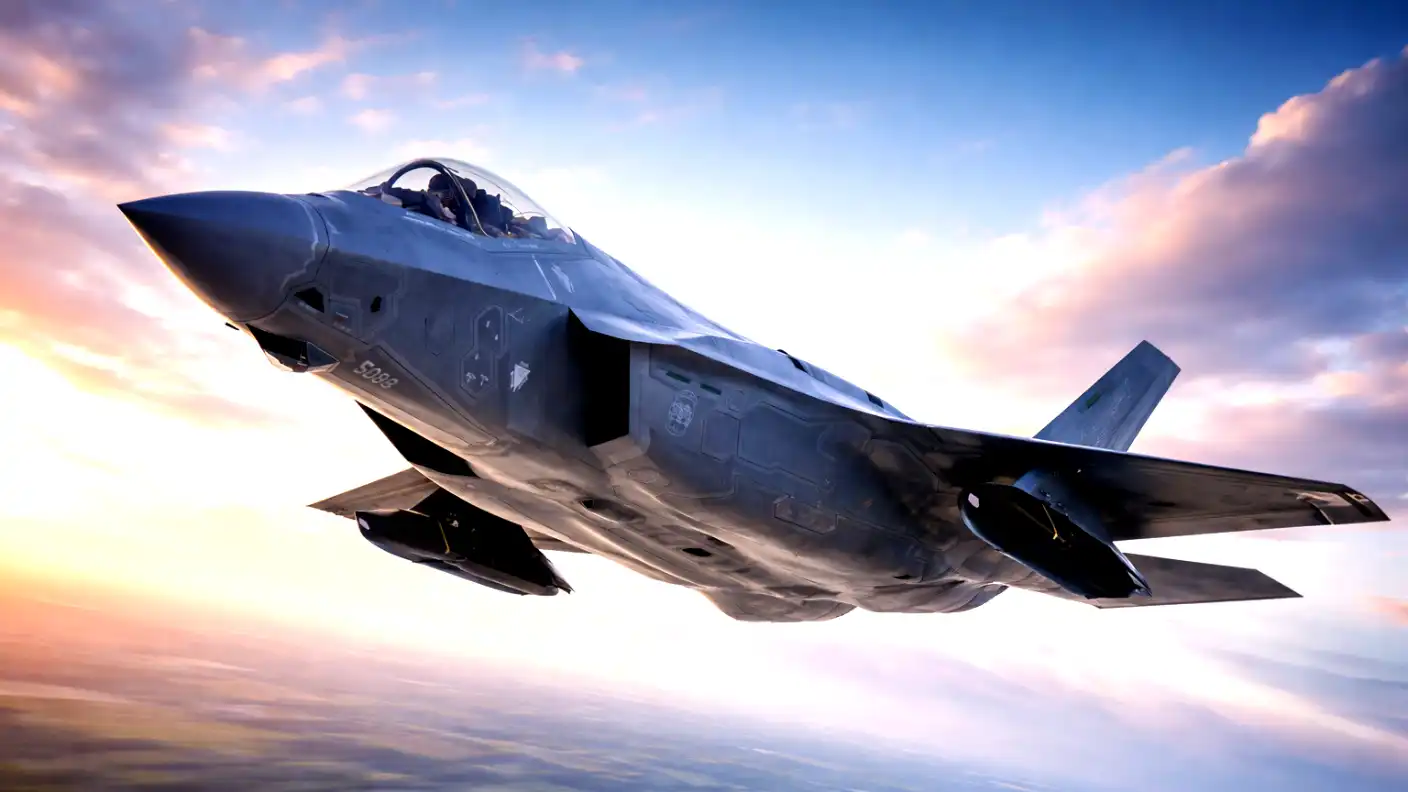
The tenuous ceasefire in the Middle East has completely shattered as the United States and Iran trade heavy military strikes across the region. On Wednesday, June 10, 2026, U.S. Central Command announced that American fighter jets launched a series of powerful retaliatory airstrikes on southern Iran. The high-impact mission came in direct response to the downing of a U.S. Army attack helicopter near the strategic Strait of Hormuz. Following the U.S. action, Iran’s Islamic Revolutionary Guard Corps immediately launched its own massive wave of retaliatory drone and missile attacks, targeting American military installations in Bahrain, Kuwait, and Jordan.
The latest spiral of violence began on Monday evening when a U.S. Army AH-64 Apache attack helicopter went down off the coast of Oman. According to a senior U.S. military official, the Apache crashed into the sea after colliding with an Iranian attack drone. In a historic first for the American military, an autonomous naval surface drone operated by Task Force 59 located and rescued the two pilots safely from the water within two hours. While President Donald Trump confirmed that the aviators survived the crash without injuries, he insisted that the United States must launch a powerful and decisive response to the hostile act.
At Trump’s direct command, U.S. Air Force and Navy fighter jets launched coordinated “self-defense strikes” at approximately 5:00 PM Eastern Time on Tuesday. The precision aerial bombardment targeted Iranian air defense batteries, ground control stations, and surveillance radar installations near the Strait of Hormuz. This critical waterway handles roughly 20 percent of the world’s daily oil supply. Local reports in southern Iran confirmed several loud explosions on Qeshm Island, as well as in the port cities of Sirik, Jask, Minab, and Bandar Abbas, where the blasts destroyed local utilities and water infrastructure.
Speaking to reporters shortly after authorizing the military campaign, President Trump defended the strikes as a proportional response to unjustified Iranian aggression against American forces and commercial shipping lanes. Trump told broadcasters that he believed the response should be very strong, adding that this specific mission achieved those exact goals. The sudden return to open hostilities has dealt a severe blow to the diplomatic process, coming just hours after Trump had optimistically claimed that peace talks were in their final stages, with a comprehensive treaty possible within two or three days.
Tehran responded to the American airstrikes with immediate and unprecedented military retaliation across the Middle East. Early on Wednesday, the Islamic Revolutionary Guard Corps announced that its forces had targeted 21 separate U.S. and allied military facilities in the region. Iran’s Foreign Ministry declared that the country will leave no attack or threat unanswered, warning that foreign forces face a persistent risk of being caught in the crossfire as long as they remain in the region. The state broadcaster reported that the military situation had temporarily calmed along the southern coast, but warned that further American aggression would trigger even more devastating strikes.
The Iranian retaliation featured a highly coordinated drone assault against the U.S. Navy’s Fifth Fleet headquarters in Manama, Bahrain. At approximately 2:30 AM local time on Wednesday, the Revolutionary Guards launched a wave of Shahed-136 one-way attack drones targeting the naval base, triggering air raid sirens and forcing personnel into emergency shelters. Simultaneously, Iranian forces launched missile strikes targeting the Ali al-Salem airbase in Kuwait. While regional air defenses went on high alert, local officials in Kuwait and Bahrain worked tirelessly to assess the physical damage. However, they reported no immediate casualties among American or allied personnel.
The Iranian strikes also extended deep into Jordanian territory, targeting the Muwaffaq Salti Air Base, which hosts U.S. F-35 fighter jets and other critical military aircraft. The Revolutionary Guards fired several long-range ballistic missiles at the base, claiming to have successfully destroyed multiple American military targets. However, Jordan’s military launched a rapid counter-response, with its state-run news agency confirming that air defense units successfully shot down five incoming Iranian missiles before they could hit their targets. Exploding debris rained down on empty fields, causing no injuries or significant material damage.
The sudden escalation of the war has sent shockwaves through global commodity markets, already struggling under the weight of a prolonged energy crisis. On Wednesday morning, global oil benchmarks jumped in Asian trading, with West Texas Intermediate (WTI) crude rising to $88.83 a barrel and Brent crude climbing to $92.11 a barrel. The threat of an expanded conflict has also forced major shipping companies to halt transits through the Strait of Hormuz, which carries nearly 1.5% of global shipping capacity. This ongoing disruption has added over $1 billion to the financial costs of international trade, fueling concerns over a severe new wave of inflation.
As the United States and Iran trade heavy military blows, the international community remains deeply concerned about the prospects of a total regional war. China’s Foreign Ministry issued an urgent statement on Wednesday, urging all parties to exercise maximum restraint and take concrete steps to cool down tensions. The rapid collapse of the April ceasefire proves that localized tactical clashes can easily drag both nations back into a massive, uncontrolled conflict. Until Washington and Tehran can find a way to establish genuine trust and enforce a verifiable peace treaty, the Middle East will remain locked in this volatile cycle of direct strikes, naval blockades, and devastating proxy wars.















