

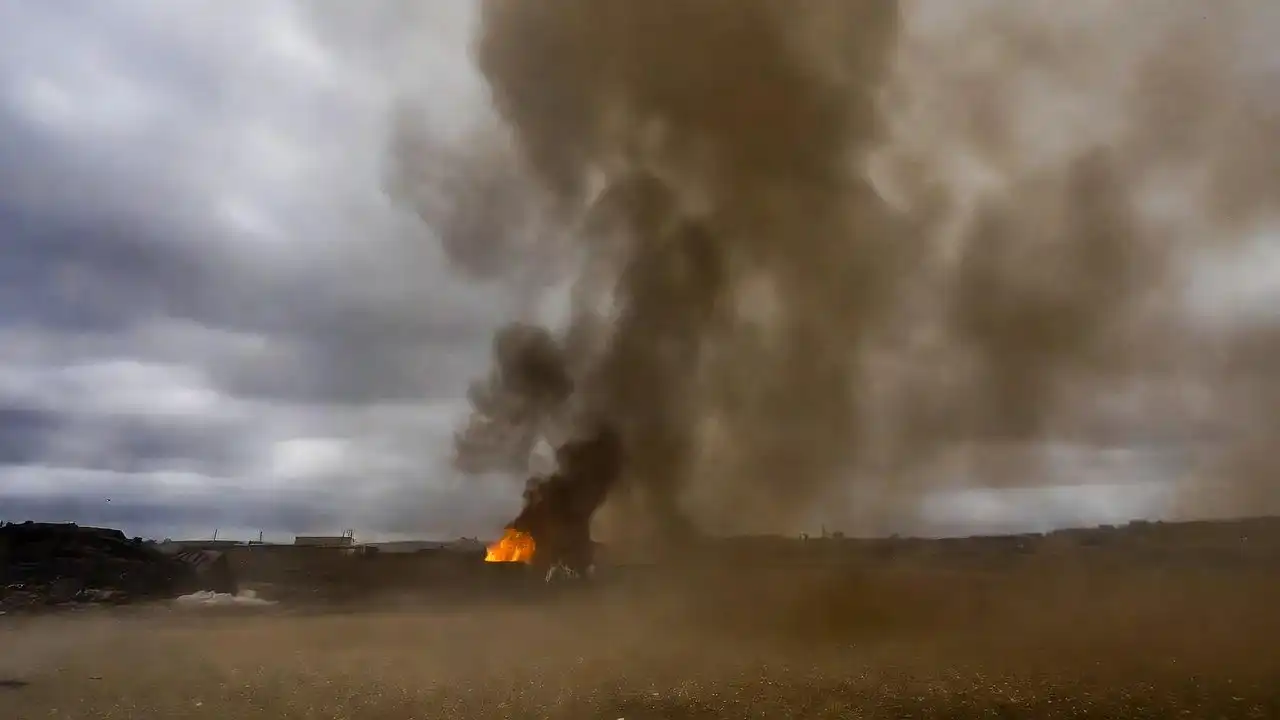
A highly volatile, double-sided reality has taken hold of the Middle East, as the United States and Iran move closer to signing a historic peace agreement even as physical clashes continue to flare in vital shipping corridors. On Friday, June 12, 2026, both Washington and Tehran publicly signaled that an agreement to end their three-month-old war is near, with senior American officials confirming that both sides have agreed on a final draft text. However, almost simultaneously, the strategic Strait of Hormuz witnessed a fresh round of military clashes, underscoring the extreme fragility of the situation at sea and proving that the path to lasting peace remains fraught with dangerous obstacles.
The potential breakthrough has triggered a wave of triumphant rhetoric from Tehran’s top leadership. Speaking on Iranian state television on Friday night, Foreign Minister Abbas Araghchi declared that Iran has successfully emerged as the ultimate winner of the war against the United States. While acknowledging that minor amendments to the text are still possible, Araghchi asserted that the tentative agreement reflects Iran’s robust resilience and military success. He warned that Tehran, in close partnership with Oman, will continue to maintain absolute control over all commercial and military traffic passing through the narrow Strait of Hormuz, declaring that Iran’s sword will always hang over the vital waterway.
Just hours after Araghchi’s highly defiant broadcast, the physical conflict erupted once again along the waters of the Persian Gulf. U.S. Central Command confirmed that American warships and air defense batteries successfully shot down multiple Iranian one-way attack drones heading directly toward commercial shipping lanes in the Strait of Hormuz. Military officials stated that the intercepted drones posed an immediate, hostile threat to international cargo vessels navigating the corridor. Following the successful interception, the U.S. military confirmed that the strategic waterway remains fully open for transit, directly defying Tehran’s claims of a complete blockade.
While U.S. forces neutralized the drone threats, residents and municipal officials reported hearing powerful explosions along the Iranian coastline, particularly near the port city of Sirik and on Qeshm Island. Iranian state-run news agencies later attributed these blasts to heavy warning shots fired by the Islamic Revolutionary Guard Corps (IRGC) Navy. Iranian commanders reportedly fired these live rounds to warn off foreign commercial vessels attempting to cross the Strait of Hormuz without receiving explicit navigation permission from the IRGC coastal checkpoints. This aggressive enforcement action has severely disrupted international trade, resulting in regional economies losing over $1 billion in port revenues. At the same time, the maritime disruptions have shaved nearly 1.5% off the region’s overall trade GDP.
Despite the ongoing clashes on the water, the draft terms of the proposed memorandum of understanding reveal a comprehensive, phased plan to de-escalate the conflict gradually. Under the negotiated framework, the United States has agreed to lift its strict naval blockade of Iranian ports—which began on April 13, 2026—and waive heavy sanctions on Iran’s crude oil exports. In exchange, Iran has committed to immediately reopening the Strait of Hormuz to unrestricted commercial shipping. The proposed agreement is valid for 60 days, serving as a critical transitional period during which the two nations must negotiate a permanent, legally binding treaty.
The most contentious and fragile portion of the peace negotiations remains the future of Iran’s advanced nuclear development program. Senior U.S. administration officials have insisted that the proposed 60-day negotiation window must ultimately lead to the complete, verifiable dismantling of Iran’s enrichment infrastructure, with its entire stockpile of highly enriched uranium to be destroyed and removed under a strict, long-term inspection regime. However, Araghchi publicly rejected these demands during his television address, declaring that Iran will never accept the destruction of its nuclear program. Instead, the Iranian foreign minister proposed down-blending the highly enriched uranium into a diluted, non-weapons-grade form inside Iran, a compromise that Washington has not yet accepted.
To protect its own national security interests and satisfy skeptical lawmakers in Washington, the Trump administration has structured the agreement as a strictly performance-based deal. Senior U.S. officials emphasized that Tehran will receive no upfront cash or release of billions of dollars in frozen assets simply for signing the memorandum. U.S. Vice President J.D. Vance posted a pointed message on social media to clarify this hardline stance, reassuring American allies that economic benefits and sanctions relief will flow to Iran only once international inspectors verify that Tehran has fully met its specific nuclear and security obligations under the new treaty.
This historic diplomatic progress is the direct result of months of persistent, high-stakes mediation by the Pakistani government. Pakistani Prime Minister Shehbaz Sharif formally confirmed on Friday that the final agreed-upon text of the peace deal has been finalized. Writing on his social media account, Sharif declared that peace has never been closer to reality than it is now. However, the Pakistani leader also warned that they are fully aware of an incessant, coordinated misinformation campaign being waged by unnamed regional actors who want to actively sabotage and derail the peace agreement, urging both Washington and Tehran to ignore the external political noise.
As both nations finalize the logistics for the historic signing ceremony, which Swiss diplomats have offered to host in Geneva, the Middle East stands at a critical historical crossroads. The successful completion of the final agreed text proves that even the most volatile, deep-seated geopolitical conflicts can find a peaceful resolution through disciplined, patient mediation. However, the ongoing drone interceptions and coastal warning shots demonstrate that the security situation at sea remains incredibly fragile. Until the two leaders officially put pen to paper and successfully execute the new treaty, the threat of a wider, catastrophic war will continue to loom over the region.















