

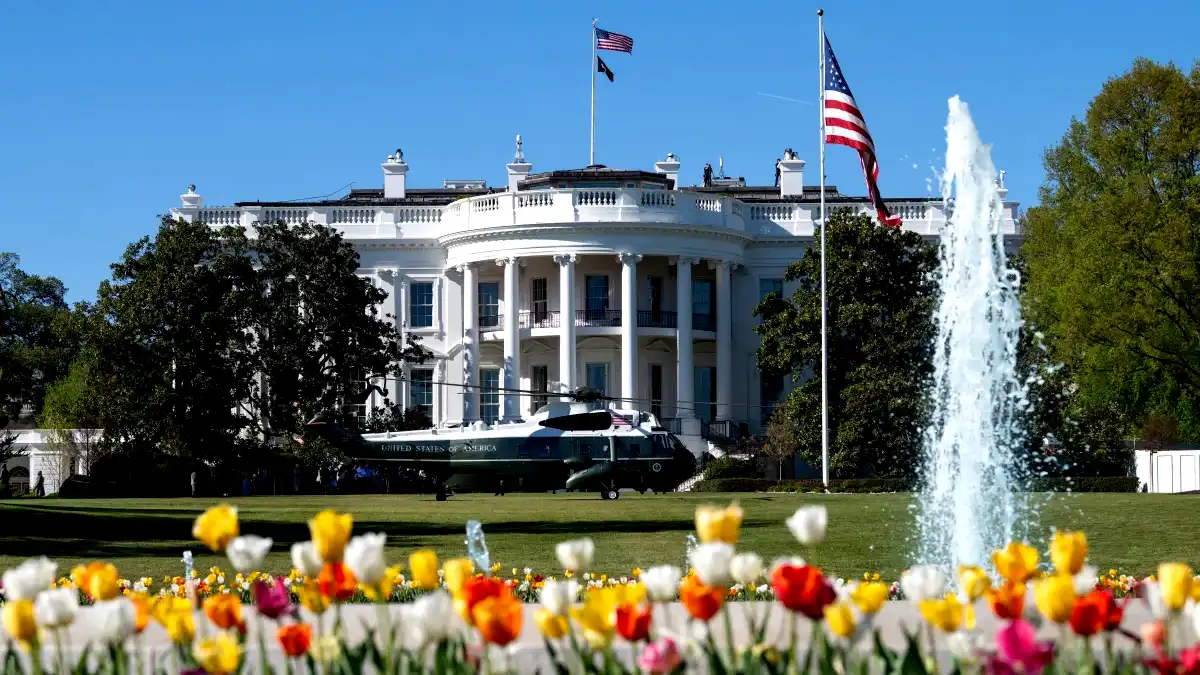
In a major legislative setback for the Trump administration, Senate Republicans have officially stripped a controversial $1 billion security funding request for President Donald Trump’s planned White House ballroom from a high-stakes government spending package. On Wednesday, June 3, 2026, Senate leadership released the final text of a massive $72 billion budget reconciliation bill designed to fund border security and immigration enforcement. Strikingly, the final text completely omitted the $1 billion in taxpayer funds originally earmarked for Secret Service upgrades at the president’s vanity project. The decision to drop the funding follows weeks of intense public backlash, fierce Democratic opposition, and a quiet rebellion within the Republican caucus itself.
The controversy surrounding the funding has been building since October of last year, when President Trump ordered the complete demolition of the historic East Wing of the White House to make way for his East Wing Modernization Project. The planned expansion features a massive 90,000-square-foot ballroom designed to host wealthy political donors and high-profile state dinners. At the time of the demolition, Trump publicly insisted that private donations would cover the entire construction cost of the project, estimated at between $200 million and $400 million, promising that “not one penny of taxpayer money” would go toward the project. However, the subsequent inclusion of $1 billion in the federal budget quickly shattered that promise, sparking immediate accusations of hypocrisy from government watchdogs.
Despite Trump’s initial public promises, top Senate Republicans quietly added the massive security appropriation to a partisan spending bill aimed at restoring funding for immigration enforcement agencies. Authored by Judiciary Committee Chairman Chuck Grassley, the proposed legislation set aside $1 billion over fiscal years 2026 through 2029 to support Secret Service security upgrades within the perimeter of the White House compound. While Grassley’s office argued that protecting the president is an expensive proposition in a dangerous world, critics quickly pointed out that the bill’s broad language allowed the government to redirect massive sums of taxpayer money directly to support the construction and maintenance of the controversial ballroom.
The proposal to spend $1 billion on a luxury ballroom at a time of severe national economic hardship triggered immediate, widespread public outrage. An Associated Press opinion poll showed that an overwhelming majority of Americans—68% to 21%—oppose using taxpayer funds to support the White House ballroom project. Sensing a major political opportunity, Senate Minority Leader Chuck Schumer launched a highly coordinated campaign to defeat the measure. In a letter to his colleagues, Schumer blasted the funding as a staggering waste of taxpayer dollars that had absolutely nothing to do with national security and everything to do with the president’s personal ego, promising that Democrats would force a series of difficult, on-the-record votes to embarrass supporters of the project.
Ultimately, the fatal blow to the ballroom funding came from a nonpartisan Senate rules official. In mid-May, Senate Parliamentarian Elizabeth MacDonough ruled that the $1 billion security provision failed to comply with the strict rules governing the budget reconciliation process. Under the Senate’s Byrd Rule, lawmakers can include provisions in reconciliation bills only if they directly affect federal spending and revenues, prohibiting any “extraneous” non-budgetary projects. MacDonough determined that the Secret Service upgrades were not appropriate for a fast-track reconciliation bill, meaning the provision would require a much higher 60-vote threshold to pass. Furious, Trump urged Senate Republicans to fire the parliamentarian, but GOP leaders quietly chose to ignore his call.
The final decision to dump the ballroom funding also coincided with a broader, highly volatile rebellion within the Senate Republican caucus over a separate aspect of the president’s agenda. GOP senators revolted over a surprise $1.776 billion Department of Justice settlement fund that Trump established to compensate his political allies. Several moderate Republican senators, including John Kennedy of Louisiana, raised severe concerns that this settlement “felt like self-dealing” and could potentially pay out individuals prosecuted for attacking the Capitol on January 6, 2021. With their own caucus deeply divided, Senate Majority Leader John Thune and other GOP leaders realized they did not have the votes to pass the package, forcing them to strip the controversial ballroom money to salvage the rest of the bill.
With the controversial ballroom funding successfully purged, Senate Republicans are preparing to advance the core of their immigration enforcement package. The filibuster-proof budget reconciliation bill provides approximately $71.8 billion through fiscal year 2029 to restore funding for agencies that Democrats have blocked for months in protest of the administration’s aggressive immigration crackdown. The vast majority of the funding goes directly to physical enforcement, directing $38.2 billion to Immigration and Customs Enforcement (ICE) and $26.1 billion to Customs and Border Protection (CBP) to hire, pay, train, and equip thousands of new frontline border patrol agents.
The massive spending bill also sets aside substantial funds to modernize border security operations and provide the Department of Homeland Security with greater operational flexibility. The legislation allocates $5 billion in discretionary funding to the department, which administrators can use largely at their discretion to manage unexpected surges in migration. Additionally, the bill mandates that the Border Patrol set aside $3.5 billion specifically for technological upgrades. This includes installing advanced border surveillance networks, purchasing next-generation screening technology, and acquiring new platforms for rapid air and marine response capabilities to secure the country’s southern borders.
This dramatic legislative retreat highlights a growing, highly significant shift in the balance of power on Capitol Hill. For much of his second term, Trump has used aggressive, hard-charging tactics to remake the federal government, often bypassing or bullying members of Congress to achieve his goals. However, the twin standoffs over the $1 billion ballroom project and the $1.8 billion DOJ settlement fund prove that even Republican senators have reached their limit in defending blatant self-dealing. As the midterm elections approach, vulnerable Republicans are increasingly unwilling to risk their political careers by funding the president’s vanity projects, creating a highly defiant Congress that could block Trump’s future legislative agenda.
In the end, the Senate’s decision to drop the White House ballroom funding represents a major victory for fiscal responsibility and the legislative process. By enforcing the strict rules of the Byrd Rule and listening to public opinion, lawmakers successfully protected $1 billion of taxpayer money from being spent on a non-essential luxury project. While the Trump administration continues to push its aggressive immigration policies, the deletion of the ballroom money shows that the executive branch faces clear and absolute limits under the U.S. Constitution. As the Senate prepares to vote on the final immigration package, the space where the ballroom funding once sat stands as a powerful reminder that not even a sitting president can bypass the power of the purse.















