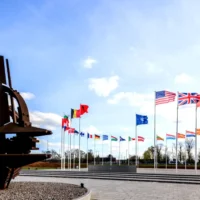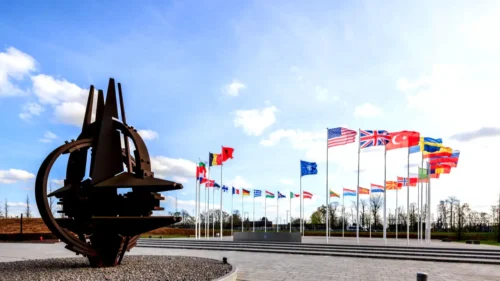

The Trump administration plans to tell NATO allies this week about a major policy shift regarding global security. Washington will significantly shrink the pool of military forces it keeps ready to help European nations during a major crisis. Three sources familiar with the matter confirmed the upcoming announcement. This move directly targets a framework called the NATO Force Model. Under this system, member countries pledge specific troops, ships, and planes to activate immediately if an enemy attacks a member of the alliance.
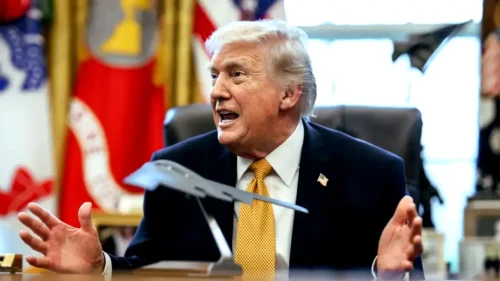
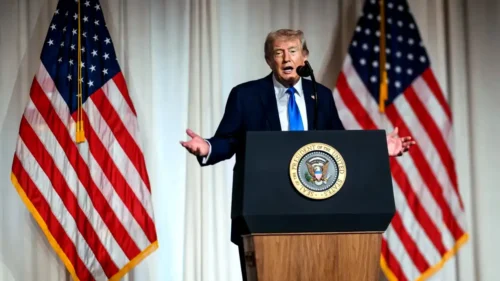
The exact numbers and types of weapons in these wartime reserve pools remain a closely guarded secret. However, the Pentagon has firmly decided to scale down its share of the burden. The sources spoke about these plans on the condition of anonymity so they could discuss private details freely. This decision matches President Donald Trump’s long-standing demands. He expects European countries to finally take primary responsibility for their own security finally. This week’s message to European capitals serves as the first concrete sign that the Pentagon is putting this exact policy into action.
Several details remain unclear right now. For example, no one knows exactly how fast the Pentagon will transfer these crisis-response duties to European generals. The sources noted that the Pentagon intends to announce its smaller commitment during a Friday meeting of defense policy chiefs in Brussels. Alex Velez-Green, a top aide to Pentagon policy chief Elbridge Colby, will represent the United States at this meeting. Changing the NATO Force Model stands as a top priority for Colby and his team right now. They want to finalize these changes before the next major NATO leaders’ summit, which kicks off in Turkey this coming July.
Colby recently stated publicly that the United States will not abandon Europe completely. He promised that Washington would continue to rely on its nuclear arsenal to protect NATO members. However, he stressed that European allies must step up and take the lead in conventional forces such as ground troops and fighter jets. A NATO spokesperson refused to comment on the matter and directed all questions to the United States government. The Pentagon also ignored immediate requests for a statement.
These new cuts add extreme pressure to an alliance already facing unprecedented strain. Several European leaders deeply fear that Washington might eventually withdraw from NATO altogether. A massive reduction in emergency wartime forces will only make these fears worse. Over the past 30 days, the Trump administration announced plans to remove exactly 5,000 American troops from European bases. The administration also completely canceled a planned deployment of 1 US Army brigade to Poland. This surprise cancellation angered many lawmakers on Capitol Hill.
Two sources confirmed that congressional aides are already aware of the Pentagon’s plan to reduce its NATO Force Model commitments. These aides expressed deep concern over the long-term impact on global security. Despite the growing panic, one senior NATO diplomat tried to calm the waters. He said European leaders still believe the United States would rush to Europe’s defense if a catastrophic war actually started. Yet, the political environment grows more toxic by the day.
Trump and his top advisors frequently criticize European allies for their defense budgets. The alliance sets a strict rule that every member should spend at least 2.0% of their gross domestic product on defense. For years, many wealthy European nations fell short of this goal, spending closer to 1.2% or 1.5% of their budgets on the military. The US president points out that American taxpayers still fund the deployment of tens of thousands of troops across Europe. He insists that Europe has enough money to build its own tanks and hire its own soldiers without relying on American funding.
Beyond military budgets, other political disputes continue to damage the transatlantic relationship. The president recently renewed his ambition to buy Greenland, a massive overseas territory owned by Denmark. This demand frustrated Danish leaders and confused other European allies. At the same time, Trump remains locked in a bitter public feud with German Chancellor Friedrich Merz. Merz recently delivered sharp criticism regarding Trump’s ongoing war with Iran. These intense diplomatic fights make military cooperation much harder.
European allies often push back against Washington’s demands by highlighting their recent progress. Many nations point out that they recently injected over $10 billion into their defense industries to buy new weapons and hire more troops. However, European defense ministers constantly remind Washington that rebuilding depleted militaries takes time. They simply cannot replace massive American logistics networks and intelligence systems overnight. Building new weapons factories and training tens of thousands of new soldiers will take at least 5 to 10 years.
As the Friday meeting in Brussels approaches, the tension inside NATO headquarters continues to rise. The upcoming July summit in Turkey will likely feature aggressive debates over money, troop numbers, and loyalty. European nations realize they must learn to defend themselves faster than they ever planned. For now, they must figure out how to fill the massive gap the United States will leave behind in the NATO Force Model.