

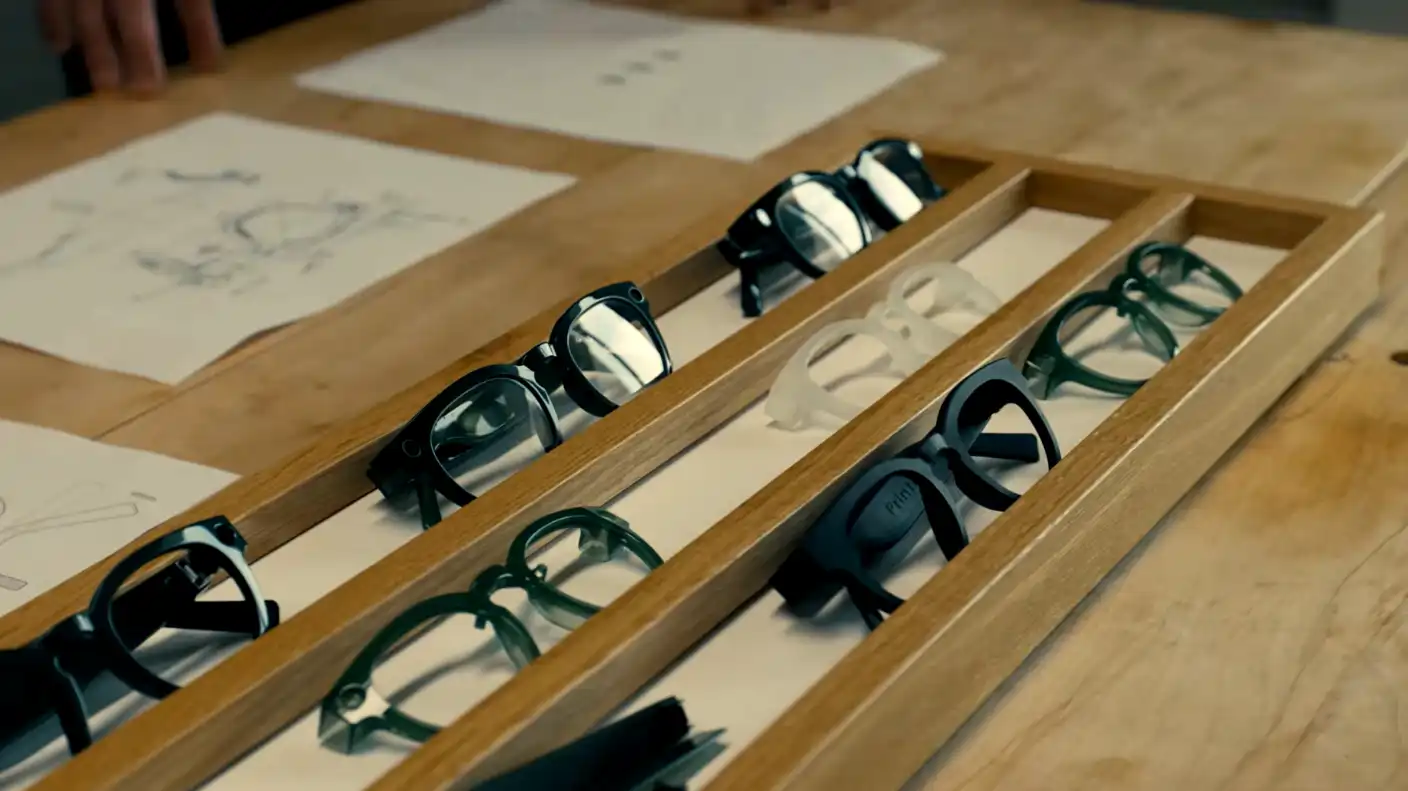
Google jumped into the wearable tech race on Tuesday. The company gave the public a first look at its brand-new audio smart glasses during its annual I/O conference. Google desperately wants to crack a tough corner of the consumer electronics market. Right now, its biggest rival, Meta, absolutely dominates the smart glasses space.
To build these new glasses, Google teamed up with Samsung and two major eyewear brands. They chose Gentle Monster for high-end fashion and Warby Parker for everyday stylish frames. These new frames will carry the Gemini artificial intelligence assistant directly inside the arms. Google confirmed the new glasses will connect seamlessly to both Android and Apple iOS smartphones. Shoppers can buy them in stores later this year.
Shahram Izadi leads the Android XR products division. He took the stage at the huge developer conference to explain the new technology. He told the massive crowd that the two designs shown on Tuesday only represent the start. A much bigger collection will arrive this fall. Izadi explained that these specific glasses do not feature a digital screen. Instead, the device privately speaks information directly into your ear through tiny directional speakers.
The technology giant unveiled these frames alongside several other major software announcements. Google rolled out completely new computer models and helpful software agents during the busy Tuesday event. These product reveals show that Google feels ready to place huge financial bets on fresh hardware. Investors constantly look for the next big device format as the modern tech era takes off.
Product Manager Nishtha Bhatia took the stage to deliver a live demonstration. She wore a pair of sleek audio sunglasses and activated the Gemini assistant with her voice. She quickly connected the glasses to the DoorDash delivery app and ordered a fresh cup of coffee. After that, she asked the assistant to read a quick 30-second summary of her unread text messages and add an upcoming meeting to her calendar.
The glasses do much more than just listen and talk. A new blog post from Google detailed several other neat features. The device can give users exact turn-by-turn walking navigation on busy city streets. Wearers can also look at random objects and ask Gemini to explain exactly what they see. The glasses feature a built-in camera to take regular photos. Users can even trigger Google’s new Nano Banana image generator to instantly alter those pictures. For example, a user can simply say, “Hey Google, take a picture and put everyone in funny hats.”
Google clearly wants to gather more user data. Tech companies use massive amounts of daily human habits to improve their complex computer models. Data acts as the real goldmine for these massive corporations. However, Google executives completely avoided talking about privacy rules or data protection terms during the live presentation. Critics often worry that smart glasses record people in public spaces without their explicit permission.
Meanwhile, Meta already enjoys massive early success in this specific product category. Mark Zuckerberg partnered with eyewear giant EssilorLuxottica to create smart versions of popular Ray-Ban and Oakley frames. These glasses carry Meta’s own digital voice assistant. Meta sold a staggering 7 million units in 2025 alone. This massive sales success gives a much-needed boost to Meta’s Reality Labs division. That specific department currently burns through over $3 billion every single quarter trying to build virtual reality tools.
Meta absolutely refuses to slow down its hardware push. Last September, the social media giant released a new pair of display glasses. These advanced frames feature a tiny screen built directly into one of the device’s clear lenses. Users can look ahead to see private text messages, view photo previews, and read live translation captions floating right in front of their eyes.
Other massive tech companies want a piece of the wearable action, too. Industry reports indicate that Apple is currently testing several frame styles and tiny camera designs for its first pair of smart glasses. Apple typically waits for a market to mature before dropping a highly polished device. Smaller hardware makers like Snap and massive overseas players like Alibaba also continue to build and test their own smart frames.
The battle for your face will officially heat up this fall. Google previously announced smart display glasses last year and teased audio-only frames back in December. Now, the company finally has real working hardware ready for everyday consumers. As voice assistants get smarter, tech giants will keep spending billions to put these computers everywhere you go.















