

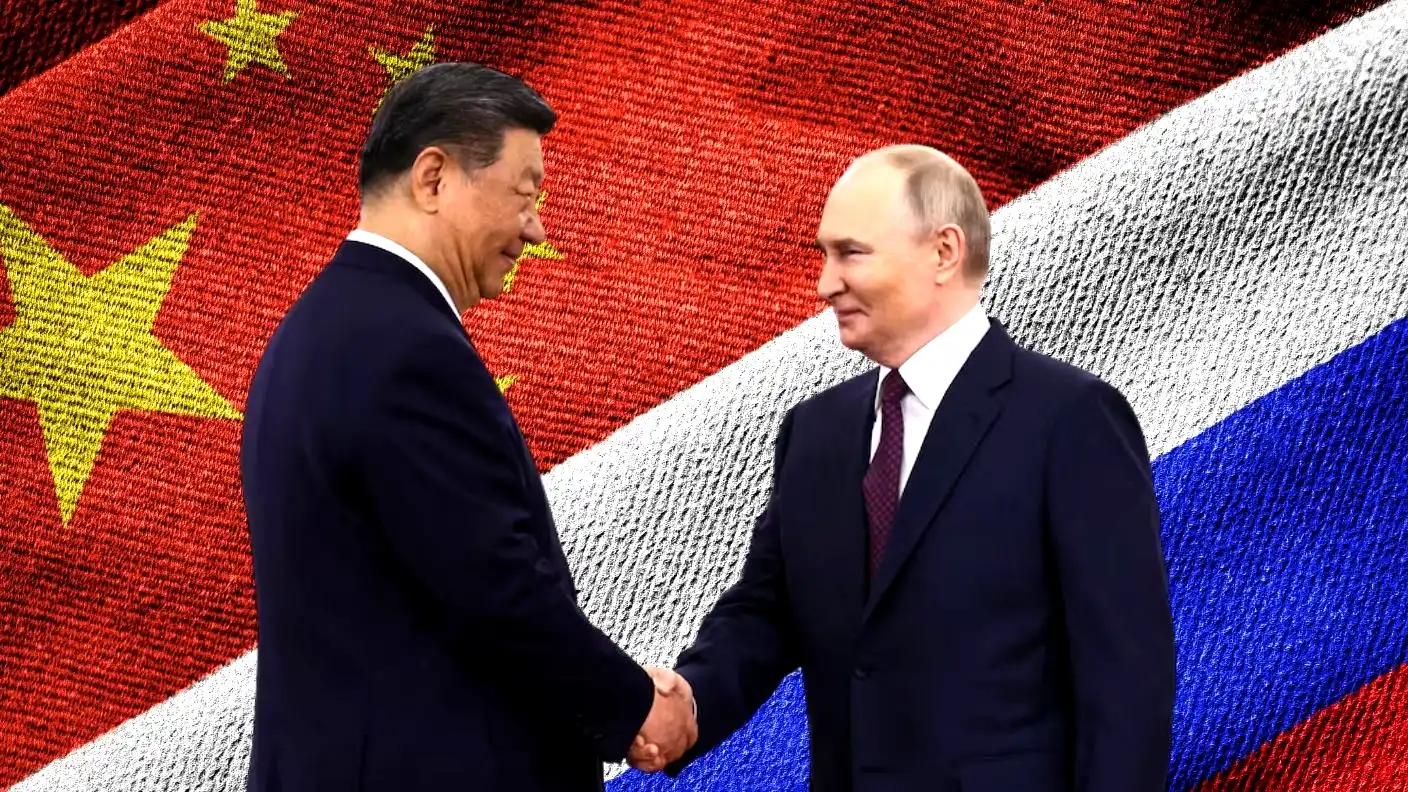
Russian President Vladimir Putin landed in Beijing for a crucial two-day state visit. A large crowd of young Chinese children waving bright national flags welcomed him on the airport tarmac. Senior Chinese officials also waited by the red carpet to shake his hand as he stepped off the plane. This carefully planned reception set a warm tone for his upcoming closed-door talks with Chinese President Xi Jinping. Both leaders view this meeting as an opportunity to project strength and unity to the rest of the world.
The timing of this visit carries heavy weight in global politics. Putin arrived just one week after US President Donald Trump finished his own high-profile trip to the Chinese capital. Hosting the leaders of the United States and Russia back-to-back is an extremely rare event in modern history. This busy diplomatic schedule places Beijing at the absolute center of a changing global power structure. Both Moscow and Washington want to secure favorable terms with the world’s second-largest economy, putting Xi in a very powerful negotiating position.
For Putin, this trip focuses heavily on fixing recent economic problems between the two allied nations. Trade between Russia and China skyrocketed after Western nations blocked Russian markets following the invasion of Ukraine. Bilateral trade hit a massive record high of $240 billion in 2024. However, that economic momentum recently hit a wall. Total trade fell by roughly 6.5% during 2025, dropping to about $225 billion. Putin wants to reverse this decline quickly and remove the bureaucratic roadblocks currently hurting Russian businesses.
Banking friction caused most of the recent slowdown in trade. Many Chinese banks stopped processing Russian payments over fears of secondary American financial penalties. To solve this massive headache, Putin brought a large team of finance experts, trade ministers, and central bankers with him to Beijing. They plan to build new independent payment systems that bypass the Western financial network entirely. Both countries want to guarantee smooth cash transactions for everyday consumer goods and heavy industrial equipment without drawing attention from American regulators.
Energy remains the biggest anchor connecting the two nations. Russia heavily depends on China to buy its crude oil, coal, and natural gas. In return, Moscow purchases massive amounts of Chinese consumer electronics, electric cars, and factory machinery. Western blockades forced Russia to completely rethink its global supply chains, making Chinese factories the primary source for almost everything the Russian public needs. Putin hopes to lock in long-term energy contracts during his meetings with Xi this week, ensuring a steady flow of cash into Moscow’s government budget.
The ongoing war in Ukraine provides the constant backdrop for all these political discussions. Western leaders strongly criticize Beijing for supplying Russia with dual-use technology that helps its military operations. Despite this intense pressure from Europe and the United States, China refuses to cut ties with its northern neighbor. Xi Jinping repeatedly states that his government wants a peaceful resolution, but he completely rejects any Western demands to isolate Moscow. He views Russia as a vital partner in pushing back against American influence.
European leaders are watching the events unfolding in Beijing with extreme caution. EU foreign policy chief Kaja Kallas recently voiced deep concerns about this developing superpower triangle. She suggested that Washington, Moscow, and Beijing all share a desire to see a fragmented, weaker Europe. Watching Trump and Putin hold separate, private meetings with Xi just days apart only amplified the anxiety spreading through European capitals. Many European diplomats fear that these three giants will negotiate new global rules that leave the European Union behind.
Beyond the formal meetings in Beijing, both governments are keeping an eye on the commercial action happening further north. The 10th Russia-China Expo is currently taking place in Harbin, a major Chinese city near the Russian border. Hundreds of Russian business owners traveled there to show off agricultural products, software, and raw materials. Putin and Xi both sent official letters praising the massive trade event and encouraging their local companies to sign new cross-border deals. This expo serves as a practical testing ground for the policies the two leaders will discuss.
Military cooperation will also dominate the conversation between the two presidents. Russia and China continue to conduct massive joint naval drills in the Pacific Ocean and fly strategic bombers together near Japan’s coast. They share a deep frustration with American military bases located across Asia. By standing shoulder to shoulder, Putin and Xi want to show the world that they can counter any military pressure coming from the Pentagon. They plan to expand their shared military exercises over the next 12 months.
The next two days will define the exact direction of the Russia-China alliance for the coming years. Putin and Xi expect to sign up to 15 new agreements covering space exploration, artificial intelligence research, and deeper cultural exchanges. The smiling children and flying flags at the airport only represent the surface level of this trip. Behind closed doors, these two leaders are actively building a rigid financial and military partnership designed to challenge the Western world order permanently.















