

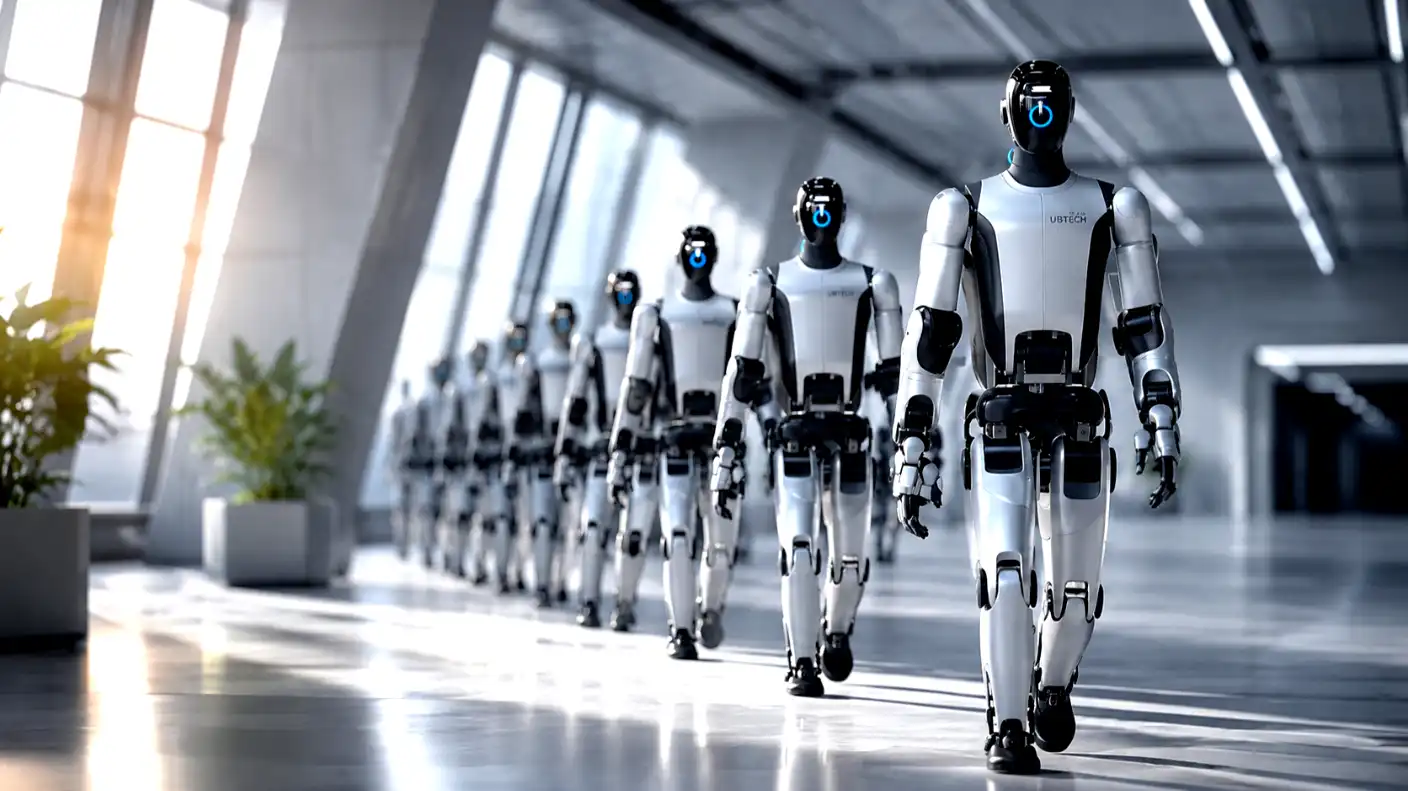
The Global Rehabilitation and Assistive Technology Network Summit opened its doors in Shanghai on May 13, 2026. Chinese technology firms used the event to demonstrate how artificial intelligence and robotics are physically transforming the medical recovery process. China currently leads the world in these fields. Now, domestic companies want to capture a massive share of the global physical therapy market.
Strokes affect millions of people around the globe every single year. These severe medical emergencies leave patients with partial paralysis and major movement problems. Robert Riener, a professor of sensory-motor systems at ETH Zurich, spoke to the summit crowd about this exact issue. He told the audience that new technology offers a lifeline for areas that handle large numbers of stroke patients.
Riener explained that modern neural networks give doctors a huge advantage. Computers process massive databases filled with patient information. Medical teams track physiological details, social habits, and daily sleep rhythms. Doctors then use artificial intelligence to spot patterns, predict future symptoms, and catch diseases before they worsen. Riener specifically praised Chinese companies for building smart exoskeletons and rehab robots that make stroke therapy much faster and more effective.
A Chinese robotics company, Fourier, leads this specific medical market. Founders launched the company in 2015 to build basic exoskeleton suits. Since then, the firm expanded its lineup to include advanced humanoid robots and fully intelligent physical therapy systems. Today, Fourier supplies its medical equipment to more than 2,000 different institutions across 40 countries.
Owen Teoh directs the international rehabilitation division at Fourier. He brings over 15 years of personal experience to the medical robot industry. Teoh told the audience that demand for Chinese robots had exploded across Europe, North America, and Southeast Asia over the last 2 years. In fact, Fourier doubled its total international sales last year when compared to its 2024 revenue figures.
Teoh believes this massive sales jump proves that China builds true high-end manufacturing products. He observed that foreign hospitals readily adopt Chinese rehabilitation robots today, ranking them among the best tools in the medical industry. He pointed out that a rapidly aging global population drives a large portion of this 100 percent sales increase, as older patients constantly require physical therapy for joint and muscle issues.
The medical industry’s trends are shifting rapidly right now. Teoh explained that companies no longer sell single, isolated machines. Instead, they sell comprehensive care solutions. The robots evolved from passive tools into active, intelligent helpers. Also, engineers want to move these machines out of crowded hospital wards. They plan to place them directly into local community centers and private homes to improve patient access.
Jose Luis Pons leads a research team at the Shirley Ryan AbilityLab. His team measures and restores lower-limb functions for diverse patients. Pons called embodied intelligence the ultimate game changer for physical therapy. He clarified that engineers do not need to create fully autonomous robots that act entirely alone without human supervision.
Instead, Pons wants developers to feed basic rehabilitation principles into artificial intelligence systems. This strategy allows the robots to collaborate perfectly with human physical therapists. The machine handles the heavy lifting and takes precise measurements. Meanwhile, the human expert guides the patient’s overall emotional and physical recovery.
Fourier designs its machines to fit this exact collaborative vision. Teoh proudly noted that users often call Fourier’s machines warm-hearted robots. Older, traditional robots force patients to repeat stiff, painful, and boring movements. Fourier uses custom game designs and force-feedback technology to address this common problem. The robot physically senses the patient’s muscle strength and applies the exact right amount of push or pull to help them move.
This force feedback creates a natural, human-like interaction. Patients actually enjoy using the machines, which encourages them to finish their daily therapy sessions. Teoh concluded his presentation by stating that China possesses technological foresight that other countries currently lack. He hopes Fourier will soon put these intelligent machines into the homes of millions of patients, giving them independence and a much better quality of life.