

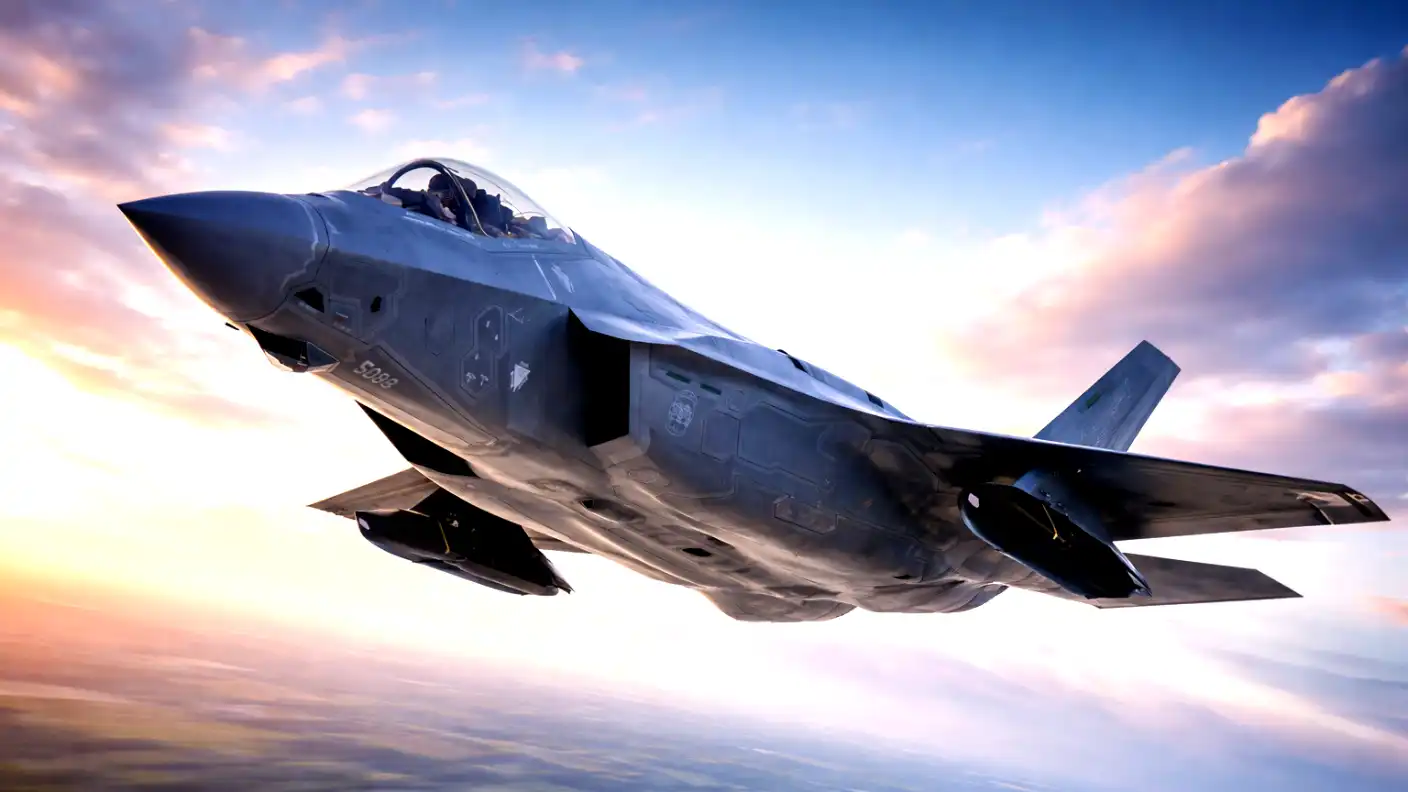
An American F-35 stealth fighter jet executed an emergency landing at a military base in the Middle East this week. The tense situation unfolded shortly after the aircraft completed a dangerous combat mission over Iran. Two military insiders told reporters that Iranian ground fire actually struck the cutting-edge jet while it flew back to safety. Iranian state media quickly echoed this bold claim, celebrating the event as a major victory for their defense forces. If investigators confirm the Iranian strike, this event marks the very first time enemy fire has damaged Washington’s premier aerial weapon during the ongoing conflict.
Captain Tim Hawkins, a spokesperson for the United States Central Command, officially addressed the alarming incident on Thursday. He confirmed that the damaged aircraft landed safely and reported that medical staff currently have the pilot in stable condition. Hawkins refused to name the specific airbase where the jet landed and kept many operational details secret. He simply stated that military leaders are actively investigating the exact cause of the emergency. Despite his careful words, the situation clearly highlights the growing dangers American pilots face every single day.
Almost immediately after the emergency landing, Iran’s Islamic Revolutionary Guard Corps released a public statement taking full credit for the attack. The semiofficial Tasnim news agency broadcast military video footage that supposedly shows Iranian air defense systems locking onto and hitting the American stealth fighter. Military analysts believe Iranian forces used passive infrared sensors to track the F-35. While modern stealth technology effectively hides jets from traditional radar, advanced infrared sensors easily track the intense heat emitted by jet engines.
Reports from defense publications offer more details about the terrifying flight. Sources familiar with the incident revealed that the American pilot suffered painful shrapnel wounds during the mid-air explosion. Despite bleeding and flying a broken aircraft, the brave pilot managed to steer the damaged machine out of hostile airspace. Losing an F-35 carries a massive financial penalty, as these specific jets cost roughly $100 million to build. Even simple repairs to the radar-absorbent exterior or the replacement of a basic internal computer component can easily cost taxpayers over $5,000 per part.
The shocking news of a damaged American stealth fighter sent immediate ripples through the global economy. As investors realized the war in the Middle East was escalating, financial markets reacted with deep anxiety. Crude oil prices suddenly spiked by 2.4% just hours after the Iranian military broadcast their attack footage. Energy traders fear that neither side will back down, meaning the daily violence could soon threaten major oil pipelines and shipping routes across the Persian Gulf.
This near-fatal incident adds to a growing list of aviation disasters for the United States military this month. Before this F-35 took enemy fire, the Air Force had already lost four manned aircraft during the intense March combat operations. Earlier in the month, a Kuwaiti fighter jet mistakenly shot down three American F-15E Strike Eagles in a chaotic friendly fire incident. Just last week, a KC-135 refueling plane crashed in western Iraq, tragically killing all six crew members on board. The military also lost about a dozen unmanned MQ-9 Reaper drones since the fighting began on February 28.
Defense Secretary Pete Hegseth continues to assure the public that the military is winning the war decisively. He recently claimed that American bombs have completely flattened Iranian air defenses. However, the successful strike against the F-35 tells a very different story. The incident proves that Iranian forces still possess the weapons and the ability to threaten the most advanced airplanes in the world. As the war enters its third week, military commanders must determine how to protect their pilots from these hidden infrared missiles.
The entire region remains on edge as the violence shows no signs of slowing down. American officials report that 13 service members have died so far, with another 200 suffering various combat injuries. The United States continues to launch daily bombing runs against thousands of targets inside Iran. Meanwhile, Tehran promises to keep firing its missiles until foreign forces leave the area. The world now watches closely to see how Washington will respond to this latest attack on its prized stealth fighter.















