

As the United States slowly reduces its military footprint across Europe, the continent must urgently look to Ukraine for lessons in survival. German Foreign Minister Johann Wadephul delivered this strong message on Monday during a visit to Athens. He traveled to Greece specifically to participate in high-level military cooperation talks with his Greek counterparts. Wadephul warned that European nations can no longer rely entirely on old strategies or foreign allies to protect their borders.
Wadephul told reporters that Europe must view the current geopolitical shift as a renewed call to action. He stated that countries must develop and deploy their own military capabilities much faster than before. He pointed directly to the ongoing conflict in Eastern Europe as the perfect blueprint for the future. Wadephul noted that Ukraine clearly shows how a nation can develop and deploy advanced military technology at incredible speed, completely shattering the slow, bureaucratic process that Europe has practiced over the past 30 years.
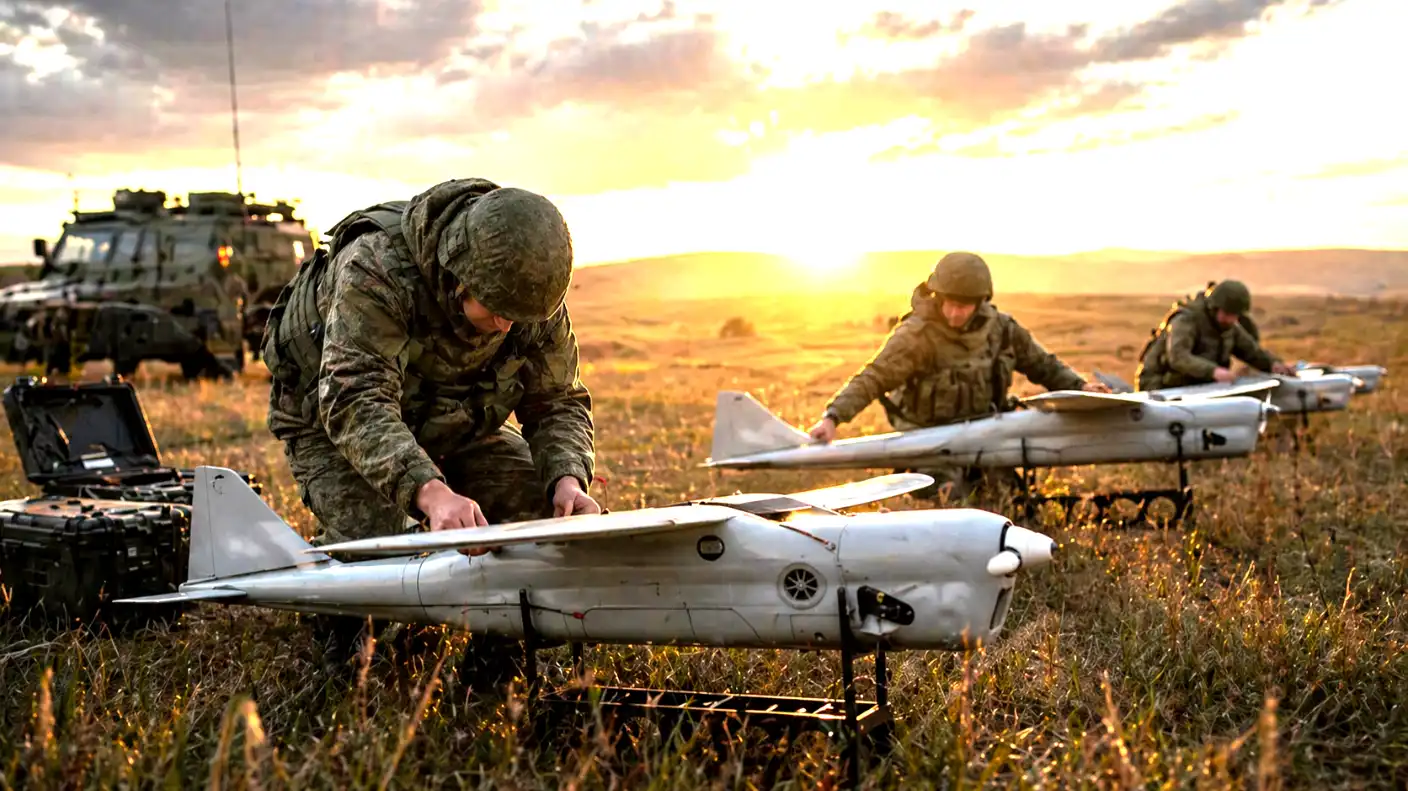
The German Foreign Minister does not stand alone in his push for modern military investment. Leaders across the continent want to build the kind of cutting-edge drones that Ukraine uses so effectively on the battlefield. Just last week, French President Emmanuel Macron attended a massive military exercise in the Champagne region. During the event, Macron strongly underscored the absolute importance of drone technology for national defense and future survival.
Drones perfectly match what Europe needs right now. The Ukrainian military proved that engineers can design and manufacture explosive drones quickly and for very little money. More importantly, these cheap drones perform incredibly well against much more expensive enemy tanks and missile systems. As Europe scrambles to rapidly bolster its defenses against the growing threat from Russia, these cost-effective drones offer a fast and deadly solution, especially as the United States begins to pull its forces away.
The American withdrawal has already started. Last week, the Pentagon officially announced plans to pull exactly 5,000 American troops out of Germany over the next 12 months. This massive troop reduction happened during an ugly, escalating political clash between United States President Donald Trump and German Chancellor Friedrich Merz. The bad blood started when Merz publicly stated that Washington lacked any clear strategy to end its ongoing war in Iran, claiming Tehran was actively humiliating the American military.
Trump reacted furiously to the criticism. He quickly threatened to remove American troops from bases in Spain and Italy, simply because the leaders of those two countries also criticized his war in Iran. The American president also brought up his old, familiar threat of pulling the United States out of the NATO alliance completely, a move that would totally devastate European security overnight.
Despite the angry rhetoric coming from the White House, Wadephul tried to calm the growing panic in Athens. He sought to downplay the terrifying specter of a large-scale American withdrawal from Europe. The German minister expressed strong confidence that the NATO alliance will maintain its conventional deterrence capability against Russia, even with fewer American boots on the ground.
Wadephul stated that he remains firmly convinced that the United States still appreciates the deep value and absolute importance of NATO. He argued that the alliance directly protects American security interests just as much as it protects Europe. However, this optimistic view clashes heavily with the numerous public statements Trump makes that actively deride the massive military alliance.
Behind closed doors, the German government still struggles to understand the American strategy. Wadephul admitted that Berlin is actively trying to determine exactly which final decisions Washington has actually made. Furthermore, German diplomats desperately want to know how much leeway they still possess to influence Trump and stop further troop reductions in the near future.
The German minister also shifted his focus to the Middle East. He publicly called on Iran to immediately sit down and negotiate an end to the current war. He demanded that Tehran take full responsibility and clearly demonstrate to the world that it had completely abandoned all attempts to build a nuclear weapon. Wadephul firmly stated that Iran has absolutely no legal justification for blocking commercial shipping through the vital Strait of Hormuz.
Following their private meeting, Greek Foreign Affairs Minister Giorgos Gerapetritis joined Wadephul to outline their shared goals. Gerapetritis announced that both Athens and Berlin are extremely keen to participate in international initiatives aimed at finally reopening the blocked trading channel. He promised that both European nations stand ready to serve as a defensive and supporting naval presence in the Middle East, but only after the active shooting stops and the situation completely stabilizes.















