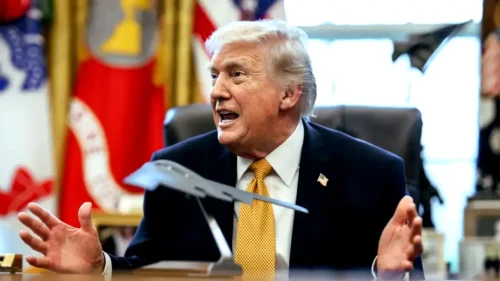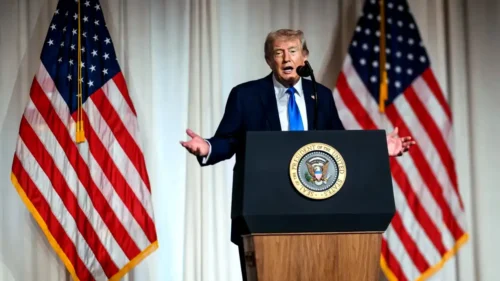

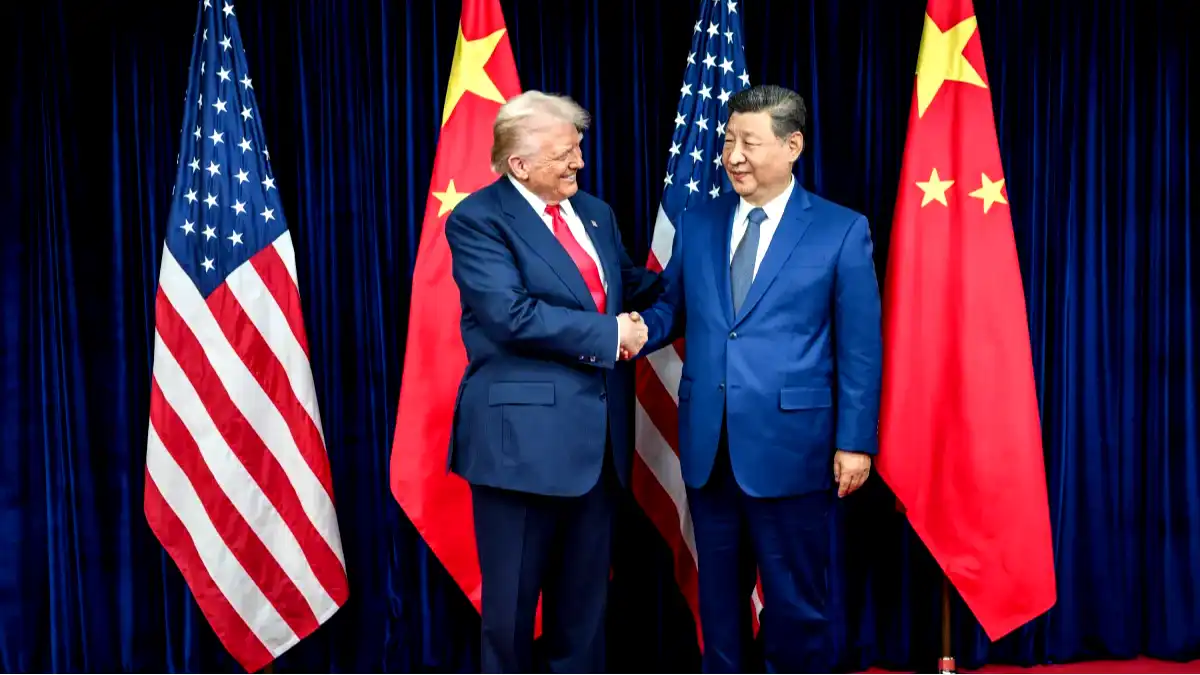
President Donald Trump announced on Monday that he will discuss American weapons sales to Taiwan with Chinese President Xi Jinping. The 2 global leaders plan to meet for high-level talks in Beijing later this week. This upcoming conversation touches on 1 of the most sensitive subjects between the 2 powerful nations. Trump made his comments during a public event at the White House, setting the stage for a tense diplomatic trip across the globe.
Reporters asked Trump directly if the United States should continue selling military equipment to the self-ruled island. Trump made it clear that he plans to tackle the issue face-to-face with the Chinese leader. He noted that President Xi wants the United States to stop these arms deals completely. Trump told the press that the Taiwan situation stands as just 1 of the many important topics on the busy schedule for Thursday and Friday in the Chinese capital.
Chinese officials recently dropped heavy hints about their goals for these upcoming meetings. They expect Xi to strongly urge Trump to halt all military support for the democratically governed island. The Chinese government views Taiwan as a rebellious province and claims the land as part of its official territory. Beijing leaders often state that they will eventually take control of the island and refuse to rule out using military force to achieve that goal.
Despite the heavy pressure from Beijing, American diplomats maintain a steady stance. A senior U.S. official recently stated that the official U.S. policy toward Taiwan remains unchanged. This official firmly added that the administration does not expect to change its approach anytime soon. The United States continues to walk a very fine line, keeping strong unofficial ties with Taiwan while officially recognizing the government in Beijing.
A specific American law guides this ongoing relationship. Congress passed the Taiwan Relations Act decades ago to outline exactly how the United States must interact with the island. This law specifically authorizes the American government to help Taiwan maintain sufficient self-defense capabilities. Because of this legal requirement, American presidents regularly approve the sale of defensive weapons, fighter jets, and military vehicles to the Taiwanese armed forces.
Just last December, the United States approved a massive new arms package for the island. The federal government cleared a potential sale of weapons and advanced military equipment worth more than $11 billion. This massive financial deal immediately triggered a furious reaction from leaders in Beijing. Chinese officials called the $11 billion sale a serious threat to regional peace and forcefully demanded that Washington cancel the contract.
The $11 billion package provides Taiwan with modern tools to protect its borders and its 23 million citizens. Military experts note that Taiwan desperately needs these upgrades to deter any potential invasion from the mainland. As China rapidly builds up its military forces, Taiwan struggles to maintain the balance of power. American defense contractors view the island as a crucial partner, while diplomats worry the constant arms deals might spark a larger military conflict.
Trump will arrive in Beijing with a long list of complex issues to discuss. Beyond the $11 billion weapons sale, the 2 presidents face huge challenges regarding international trade, technology disputes, and global security. Both leaders want to look strong and secure victories for their citizens back home. However, finding a compromise on Taiwan remains incredibly difficult because neither side wants to back down on such a core national issue.
Other countries across Asia will watch this meeting very closely. Nations like Japan and South Korea rely heavily on American military strength to keep the region stable. If Trump decides to reduce arms sales to Taiwan to please Xi, other American allies might start to worry about their own security deals. Every word spoken during these 48 hours in Beijing carries massive weight for the future of the entire Pacific region.
Political analysts expect a tough conversation behind closed doors on Thursday and Friday. Xi will likely use the meetings to push his absolute claim over Taiwan and demand an end to American interference. Trump, on the other hand, understands the legal duty the United States holds under the law. The world waits to see whether this Beijing summit will change the future of international arms sales or whether the billion-dollar defense deals will continue as usual.