

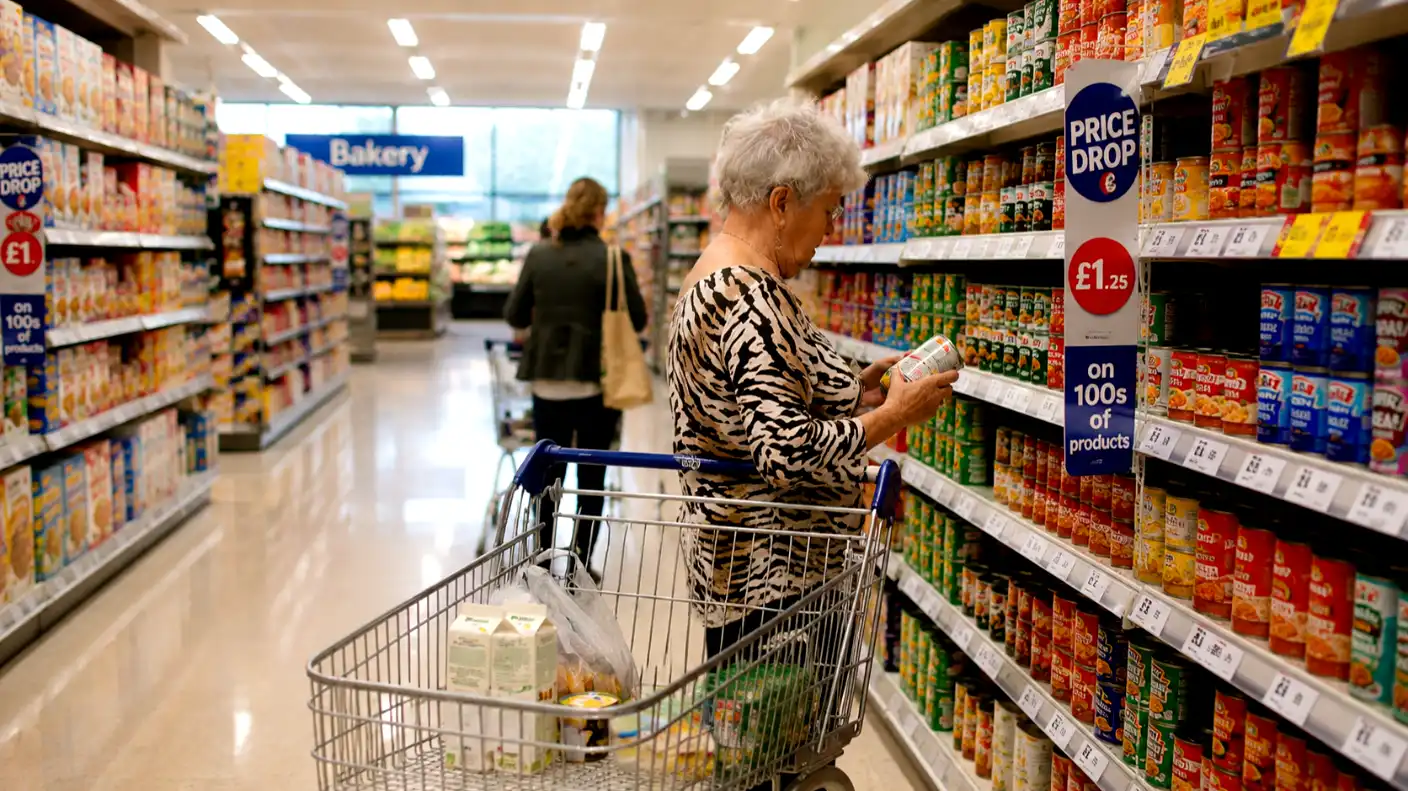
US consumer sentiment crashed to a fresh, historic record low in May 2026. The final University of Michigan survey showed the index plunging to a revised 44.8, as runaway inflation and soaring gasoline prices crushed household confidence. This represents the weakest reading in the survey’s history, falling even below the depths of the 2008 financial crisis and the 2022 inflation peak.
The final number of 44.8 points represents a massive 10% decline in consumer confidence since April, when the index sat at 49.8 points. It also marks a staggering 14.2% decline compared to the same time last year. Economists originally expected a softer drop to around 48.2 in their early-May estimates, but relentless price pressures on Main Street proved much worse than Wall Street had projected.
Joanne Hsu, the director of the University of Michigan’s Surveys of Consumers, explained that the ongoing war in the Middle East is directly driving this panic. Hsu noted that consumer sentiment fell for the third straight month as persistent supply disruptions in the Strait of Hormuz continue to boost gasoline prices. With average fuel prices soaring past $4.50 a gallon across America, everyday drivers are feeling severely stretched.
The cost of living has now become the absolute primary concern for the American public. The May survey revealed that exactly 57% of consumers spontaneously complained that high prices are actively eroding their personal finances. This is a significant jump from the 50% of respondents who made the same complaint last month. The financial pain has forced households to drain their savings, pushing the national personal saving rate down to a four-year low of just 3.6% in recent months.
The economic pain does not hit everyone equally. The survey showed that lower-income households and Americans without college degrees posted the sharpest drops in sentiment. These vulnerable groups must spend a much larger percentage of their weekly income on essential items like food and gas, so they feel the immediate impact of inflation far more quickly than wealthy families do.
This collapse in consumer confidence carries massive political consequences for President Donald Trump ahead of the November midterm elections. Both self-identified Republicans and political independents saw their economic confidence plunge to the lowest levels of the current presidential administration. Meanwhile, Democrats’ sentiment remained mostly unchanged from last month. Trump’s overall popularity continues to suffer as voters blame his administration’s Middle East policy for their expensive daily lives.
Consumers also express growing fear that high prices will linger for years. Year-ahead inflation expectations inched up from 4.7% last month to 4.8% in May. This is a massive jump compared to the 3.4% inflation expectation Americans held back in February, right before the US-Israeli war with Iran began. Long-run inflation expectations also climbed from 3.5% in April to a highly concerning 3.9% in May, moving well above the stable 2.8%-3.2% range seen throughout 2024.
Looking at the individual parts of the survey shows a total loss of confidence in current conditions and the future. The index for current economic conditions fell to 45.8, down significantly from 52.5 in April. At the same time, the consumer expectations index fell to 44.1, down from 48.1 last month. This widespread pessimism suggests that Americans do not expect any quick economic relief on the horizon.
The Federal Reserve is watching these numbers with deep concern. Fed Governor Christopher Waller warned on Friday that while the US central bank is hopeful for a peaceful resolution in the Middle East, the ongoing supply disruptions make monetary policy highly uncertain. High energy costs make it almost impossible for the Fed to cut interest rates anytime soon. If inflation continues to hover between 4% and 5% in the coming months, policymakers might even have to consider fresh rate hikes, further squeezing the American public.















