

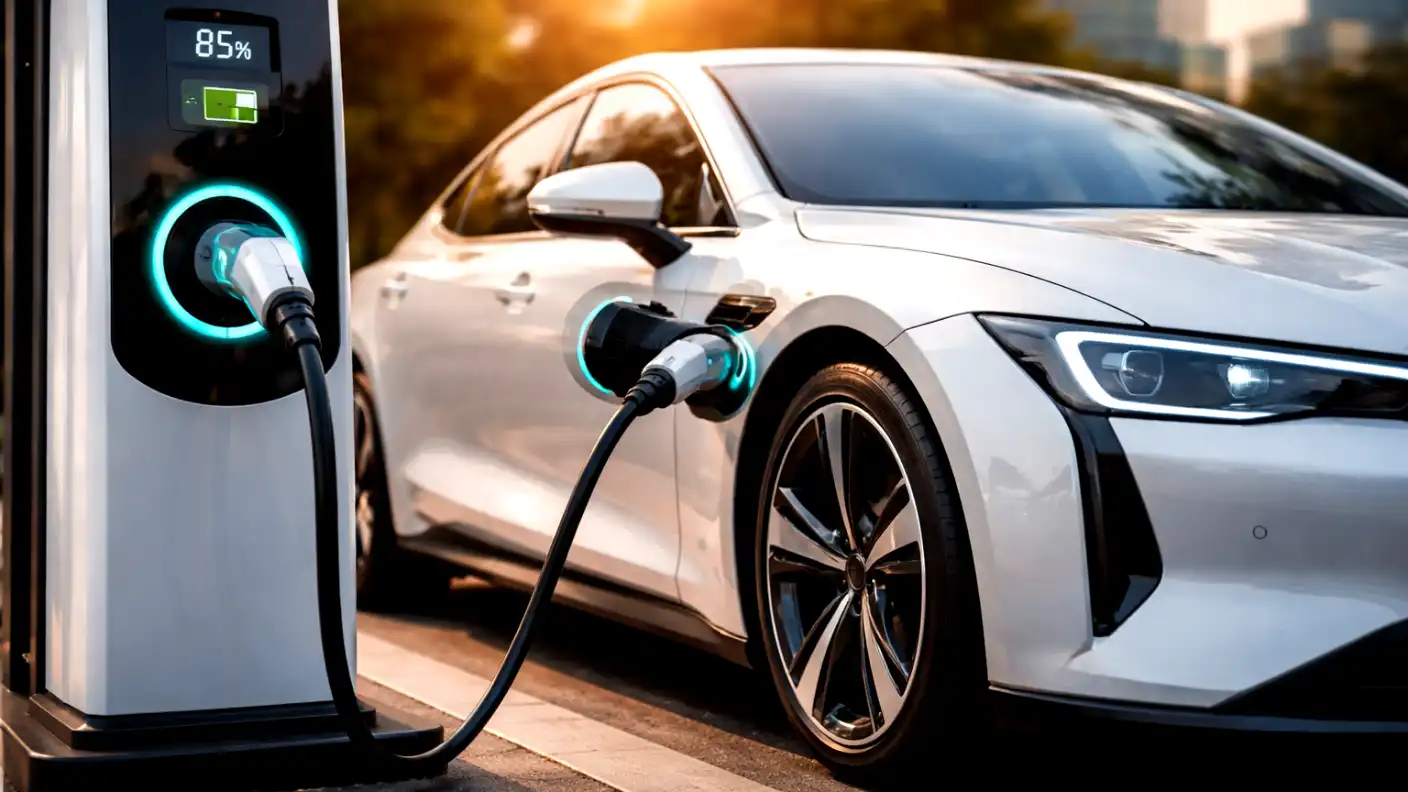
Chinese car companies exported 1.384 million new-energy vehicles during the first four months of this year. This massive number represents a 1.2 times increase compared to the same period last year. The China Association of Automobile Manufacturers released new statistics on Monday, showing exactly how quickly the green transportation sector is growing. Buyers around the world clearly want these environmentally friendly cars as nations push to lower their daily carbon emissions.
Looking only at April, the numbers look even stronger. Car makers shipped 430,000 new-energy vehicles to other countries in those 30 days alone, up 1.1 times from the previous April. Inside China, factories produced 1.32 million of these vehicles in April, marking a solid 5.5 percent increase in manufacturing. Overall, monthly domestic and international sales hit 1.344 million units, a 9.7 percent rise. Amazingly, new-energy vehicles made up 53.2 percent of all new car sales during the month. Over half the people buying new cars chose battery or hybrid models instead of traditional gas engines.
Cui Dongshu serves as the secretary-general of the China Passenger Car Association. He explained that this rapid export growth directly answers a massive international demand for cleaner transportation. Countries everywhere want to transition their economies away from fossil fuels. Cui pointed out that China currently leads the world in battery technology and electrification. Because Chinese companies build so many cars, they help drive down manufacturing costs and improve technology at a record pace. This scale gives drivers around the globe much better, cheaper options when they shop for a new car.
The continued surge in exports proves the Chinese automotive sector operates with an open and cooperative mindset. Cui emphasized that the massive size of the Chinese market creates excellent opportunities for international businesses. Foreign companies can partner with Chinese firms to build better cars, learn new manufacturing techniques, and expand their own global sales reach.
This spirit of teamwork took center stage at the recent Beijing Auto Show. Major foreign luxury brands used the popular event to display their latest electric models. Famous German automakers like BMW and Mercedes-Benz proudly showcased brand-new electric vehicles they developed using Chinese technology. These traditional car giants know they must adapt quickly and use the best available tech if they want to survive and win over buyers in the world’s largest auto market.
None of this success happened overnight. Last year, Chinese factories produced and sold more than 16 million new-energy vehicles. These massive production numbers kept China in the number one spot globally for the 11th consecutive year. The nation spent over a decade building the modern factories, training the engineers, and securing the supply chains needed to dominate the global electric vehicle market.
Knowing how important these supply chains are, international leaders recently gathered in Shanghai. They held a special workshop alongside a major Asia-Pacific Economic Cooperation meeting. Government officials and car industry experts from many different nations sat down to discuss the future of electric vehicles. They focused heavily on how countries can work together to share battery components, secure raw materials, and build reliable cross-border supply networks.
Ausein Wirojtacha attended the Shanghai workshop. He works as a plan and policy analyst at the Office of Industrial Economics, which operates under Thailand’s Ministry of Industry. Wirojtacha told reporters that the world must pursue decarbonization right now to save the environment. He said this urgent goal requires countries to accelerate the rollout of electric and hybrid cars as quickly as humanly possible.
Wirojtacha explained that the global automotive industry is simply too big for any one country to handle alone. Making millions of cars requires constant support and close collaboration among nations, especially when shipping specific computer chips and battery components across borders. He noted that if leaders truly care about reducing emissions, they must establish strong regional cooperation rather than trying to build everything by themselves.
When reporters asked about the daily performance of Chinese cars on Thai roads, Wirojtacha called them very impressive. He mentioned that he personally test-drove several Chinese brands recently. He noticed that these cars feature incredibly smart technology and offer a wide range of comfort features for the driver. This makes them highly competitive with older, more established foreign brands that have traditionally sold cars in Southeast Asia.
Thailand wants to play a much bigger role in this electric revolution moving forward. Wirojtacha noted that China possesses leading industrial expertise that can readily spill over into the rest of Asia. Many Chinese car companies already invest heavily in Thailand. They build new factories there and use local Thai workers and local parts to assemble their vehicles. Wirojtacha sees this as a perfect chance for both Thailand and China to grow their economies together and dominate the future of green transportation.















